
Understanding how to properly submit a request for a bank statement is an essential skill for managing your financial life. Whether you need documentation for a loan application, tax preparation, or simply tracking your spending habits, knowing the right methods to obtain your bank statements can save time and prevent frustration. Financial institutions offer multiple channels for accessing these critical documents, each with its own advantages, potential costs, and processing timelines that you should understand before making your request.
Understanding Bank Statements and Why You Need Them
A bank statement serves as an official record of all transactions that occurred in your account during a specific period, typically monthly. Bank statements contain essential information including deposits, withdrawals, fees, interest earned, and your beginning and ending balances. These documents function as both a tracking tool and verification source for your financial activities.
Primary Reasons to Request Bank Statements
Financial institutions generate statements automatically each month, but there are numerous scenarios where you might need to make a specific request for a bank statement:
- Loan applications requiring proof of income or account balances
- Rental applications where landlords verify financial stability
- Tax preparation needing detailed transaction records
- Divorce proceedings or legal matters requiring financial documentation
- Dispute resolution when questioning unauthorized charges
- Lost or missing statements from previous months or years
- Immigration applications demonstrating financial resources
The purpose of bank statements extends beyond simple record-keeping, serving as legal documents that carry significant weight in various official proceedings.

Methods to Request Bank Statements
Modern banking offers unprecedented flexibility in how you access your financial records. Each method carries distinct advantages depending on your urgency, technical comfort level, and specific requirements.
Online Banking Portal Access
The fastest and most convenient way to fulfill a request for a bank statement involves logging into your online banking account. Most financial institutions maintain digital archives of statements dating back several years, allowing instant access without fees or waiting periods.
Steps for online statement retrieval:
- Log into your bank's website or mobile application
- Navigate to the "Statements" or "Documents" section
- Select the account and date range needed
- Download the PDF or view the statement online
- Print or save the document as required
This method provides immediate gratification and allows you to obtain bank statements at any hour without visiting a branch. However, digital statements may not always meet requirements for certain applications that demand original copies with physical signatures or raised seals.
In-Branch Statement Requests
Visiting your local bank branch remains a reliable option for those who prefer face-to-face assistance or need certified copies. Branch representatives can process your request for a bank statement while you wait, typically providing printed copies within minutes for recent months.
| Request Type | Typical Fee | Processing Time | Best For |
|---|---|---|---|
| Current month | Free | Immediate | Quick verification |
| Previous 1-3 months | $0-$5 | Immediate | Recent history |
| 4-12 months ago | $5-$10 | Same day | Tax preparation |
| Over 1 year old | $10-$30 | 3-7 business days | Legal matters |
Remember to bring valid government-issued identification when making in-person requests. Some institutions may require additional verification for accounts with multiple signatories or business accounts.
Mail and Phone Requests
Traditional methods still serve customers who lack internet access or prefer conventional communication channels. You can call your bank's customer service line and request statements to be mailed to your address on file. This approach works well when you need multiple months of documentation but aren't in immediate need.
Written requests submitted by mail should include:
- Your full name and account number
- Specific months or date range needed
- Current mailing address
- Signature authorizing the request
- Copy of identification (for security purposes)
Processing times for mailed requests typically range from 7 to 14 business days, plus additional time for postal delivery.
Requesting Statements Before the Regular Cycle
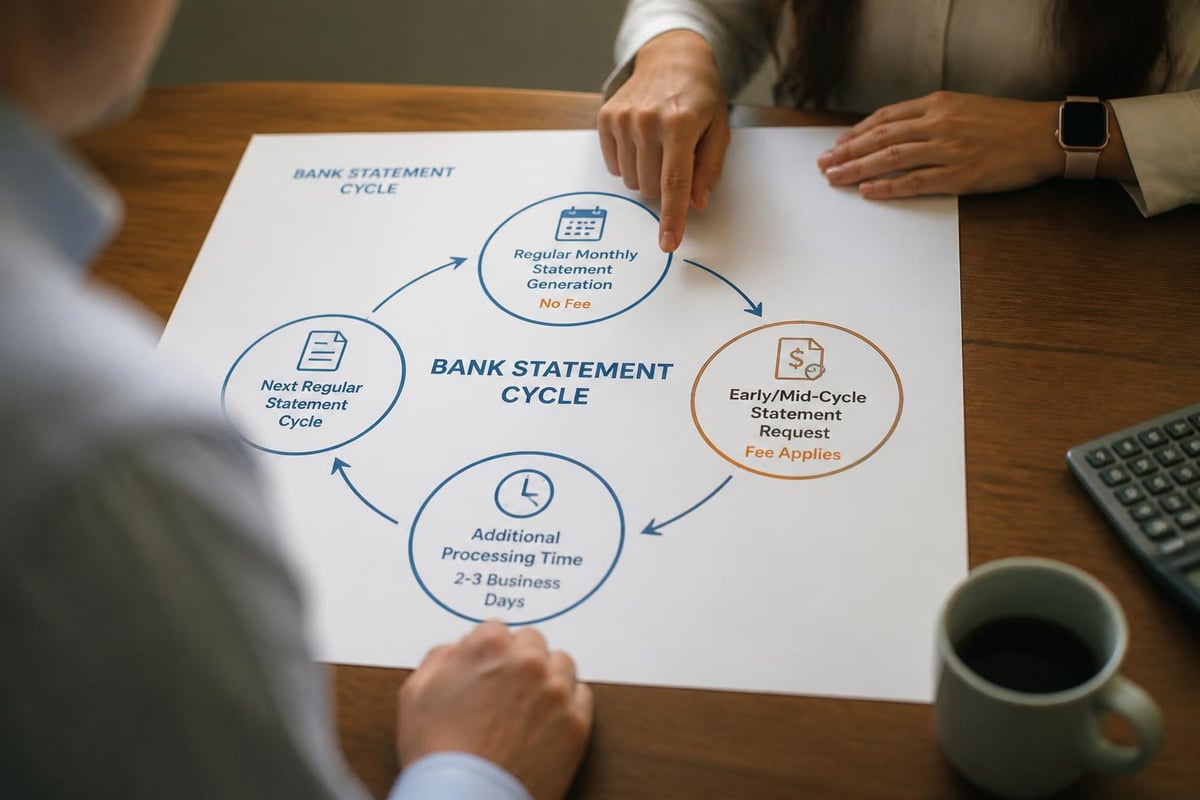
Circumstances sometimes require access to transaction records before your monthly statement period closes. Requesting a bank statement early is possible at most institutions, though policies and fees vary significantly across different banks.
When Early Statements Make Sense
Time-sensitive situations often justify the potential fees associated with mid-cycle statement requests. Mortgage applications with tight deadlines, urgent legal proceedings, or unexpected verification requirements might necessitate current account activity documentation before the standard monthly statement generates.
Common scenarios requiring early statements:
- Loan closing dates that fall mid-month
- Court-ordered financial disclosures with specific deadlines
- Immigration interviews scheduled between statement periods
- Emergency verification of account status
Most banks can generate interim statements covering transactions from the last statement date through the current day. These documents may appear identical to regular statements but typically include a notation indicating they represent a partial period.
Understanding Fees and Costs
Financial institutions approach statement request fees with varying philosophies. Some banks offer unlimited free statement access through online channels while charging for physical copies or research-intensive historical requests. Understanding your bank's fee structure helps you make cost-effective choices when requesting documentation.
Typical Fee Structures in 2026
Digital statements accessed through online banking platforms usually carry no charges regardless of how many you download or how frequently you access them. This zero-cost approach encourages customers to maintain regular financial oversight.
Physical statement fees depend on the age of the document and delivery method:
- Current cycle statements: Usually free at branches
- Recent history (3-6 months): $3-$7 per statement
- Historical requests (6-24 months): $7-$15 per statement
- Archive research (over 2 years): $15-$30 per statement
- Expedited delivery: Additional $10-$25 for overnight shipping
- Certified copies: $10-$20 premium for legal documents
Premium account holders often enjoy waived fees for statement requests as part of their package benefits. Check your account agreement to understand which charges apply to your specific account type.
Special Circumstances and Considerations
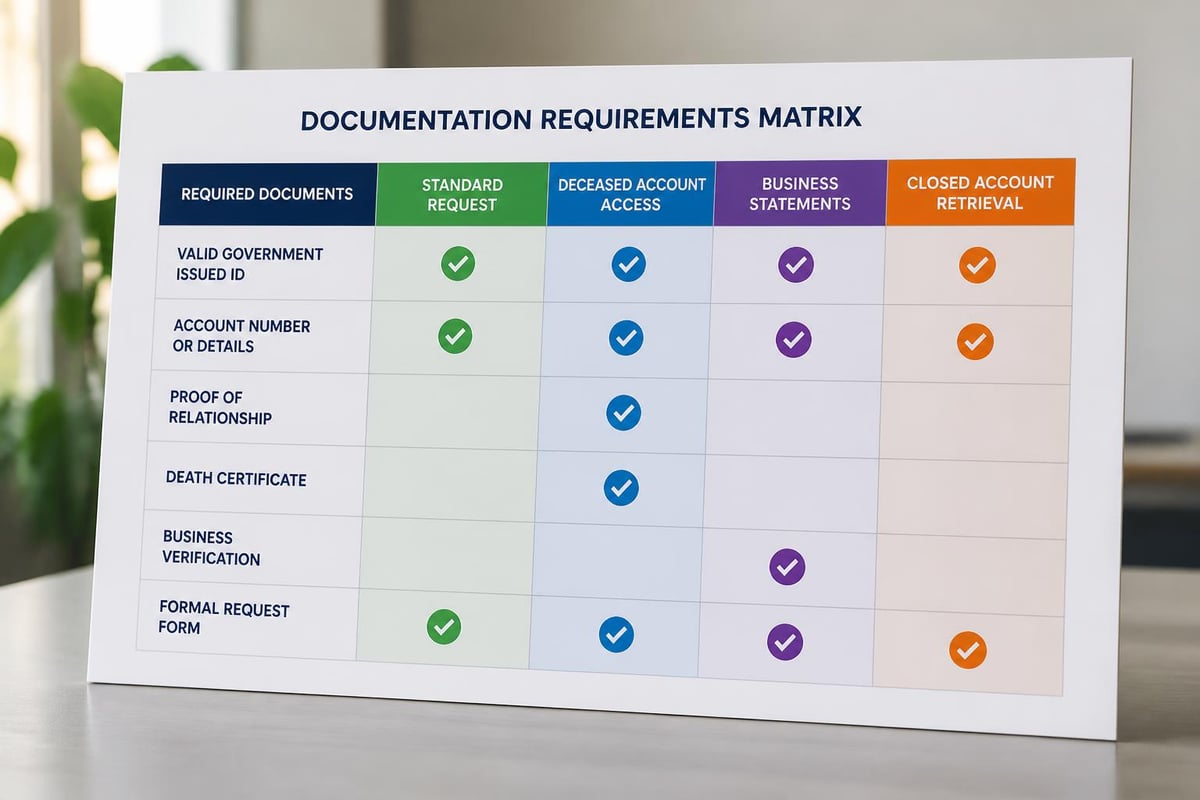
Certain situations add complexity to the standard request for a bank statement process. Deceased account holders, business accounts, and closed accounts each present unique challenges requiring additional documentation or authorization.
Accessing Statements for Deceased Account Holders
Estate executors or administrators frequently need bank statements to settle financial affairs. Banks require specific legal documentation before releasing deceased customer information:
- Death certificate (certified copy)
- Letters testamentary or letters of administration
- Court appointment documents for executor or administrator
- Valid identification for the requesting party
The institution may apply additional security measures and processing time for these sensitive requests, often requiring 10-15 business days for fulfillment.
Business Account Statement Requests
Companies requesting bank statements must demonstrate authorization through proper documentation. Authorized signers listed on the account can typically request statements directly, but others may need:
- Corporate resolution authorizing the request
- Documentation of officer status or signing authority
- Business identification number verification
- Additional identity verification for the requesting individual
Business accounts often generate higher volumes of transactions, potentially increasing fees for historical statement research or special formatting requests.
Closed Account Statements
Obtaining statements from closed accounts requires contacting the bank's records department rather than standard customer service channels. Financial institutions maintain closed account records for varying periods based on regulatory requirements and internal policies, typically 7-10 years.
Expect longer processing times and higher fees for closed account statements. Some banks charge premium fees ($25-$50) for archive research, particularly for accounts closed more than two years ago.
Digital Statement Management and Conversion
Modern financial management increasingly relies on digital formats that integrate with accounting software and financial planning tools. While banks provide statements in PDF format, many users need their transaction data in more flexible formats for analysis and record-keeping.
When you request statement information, consider how you'll ultimately use the data. Spreadsheet formats allow sorting, filtering, and calculations that static PDFs cannot accommodate. Services that convert PDF bank statements to usable spreadsheets enable seamless integration with platforms like QuickBooks, making reconciliation and financial analysis significantly more efficient.
Organizing Your Digital Statements
Establishing a systematic approach to storing and naming digital statements prevents future retrieval headaches:
- Create folder structures organized by year and account
- Use consistent naming conventions: "2026-01_Checking_Statement.pdf"
- Maintain backup copies in cloud storage and external drives
- Encrypt sensitive financial documents with password protection
- Review checking statements regularly for accuracy
Privacy and Security Considerations
Every request for a bank statement should balance accessibility with robust security measures. Financial institutions implement strict protocols to prevent unauthorized access to your transaction history, but customers must also practice responsible document handling.
Protecting Your Statement Information
Bank statements contain comprehensive personal financial data that identity thieves can exploit. When requesting and receiving statements through any channel:
- Verify you're using official bank websites or phone numbers
- Never share online banking credentials via email or text
- Shred physical statements before disposal
- Use secure networks when accessing online banking
- Monitor for phishing attempts mimicking bank communications
- Enable two-factor authentication on all banking accounts
Public Wi-Fi networks pose particular risks when accessing financial information. Wait until you're on a secure, private network before logging into banking portals or downloading sensitive documents.
Bank Security Measures
Legitimate financial institutions will never ask for your full password or PIN through email, phone calls, or text messages. When you initiate a request for a bank statement, expect the bank to verify your identity through:
- Knowledge-based authentication questions
- Security codes sent to registered phone numbers or email addresses
- Verification of recent account activity
- Confirmation of personal information on file
Understanding what a bank statement contains helps you recognize fraudulent documents and protect yourself from scams involving fake statements.
Alternative Documentation Options
Sometimes a full bank statement exceeds what's needed for your specific purpose. Understanding alternative documentation can save time and potentially reduce costs when making your request for a bank statement or related financial records.
Partial Transaction Histories
Many banks can provide customized transaction reports covering specific date ranges or transaction types without generating a complete statement. These targeted reports work well for:
- Proving a single large deposit or payment
- Documenting recurring transactions for subscription audits
- Tracking specific vendor payments for expense reports
- Verifying check clearance dates
Balance Confirmation Letters
Loan officers or other third parties sometimes accept official balance confirmation letters instead of complete statements. These documents verify account balances as of a specific date without revealing detailed transaction history, offering greater privacy while meeting verification requirements.
Year-End Summaries
Tax preparation often benefits from year-end summary documents that compile key information from twelve months of statements. Rather than requesting individual monthly statements, ask your bank about annual summary options that consolidate:
- Total deposits and withdrawals
- Interest earned or paid
- Fees assessed throughout the year
- Average daily balances
Common Mistakes to Avoid
Even straightforward statement requests can encounter delays or complications when customers overlook important details. Being aware of these common pitfalls ensures smoother processing of your request for a bank statement.
Frequent mistakes include:
- Requesting statements for the wrong account number
- Providing outdated contact information for mailed statements
- Failing to verify account ownership or authorization
- Assuming immediate availability of very old statements
- Not clarifying the specific format needed (PDF, paper, certified)
- Missing cut-off times for same-day processing
- Forgetting to specify expedited service when deadlines loom
Taking a few extra minutes to double-check request details prevents frustrating delays and potential fees for duplicate requests. Keep confirmation numbers or reference codes for all statement requests to facilitate follow-up if issues arise.
Working with Different Financial Institutions
Not all banks approach statement requests with identical policies. Credit unions, online-only banks, and traditional brick-and-mortar institutions each have distinct procedures reflecting their operational structures and customer service philosophies.
Online Banks and Fintech Companies
Digital-first financial institutions typically excel at electronic statement access while sometimes limiting or eliminating physical statement options entirely. When banking with online-only providers:
- Expect extensive digital archives (often 7+ years)
- Anticipate minimal or zero fees for electronic statements
- Plan for longer processing times if physical copies are needed
- Utilize robust mobile app features for statement access
- Download statements regularly as backup against future access issues
Credit Unions and Community Banks
Smaller financial institutions often provide more personalized service for statement requests but may have less sophisticated online platforms. The trade-off between technology and personal attention influences how you approach your request for a bank statement at these institutions.
International Banks and Multi-Currency Accounts
Cross-border banking adds complexity to statement requests, particularly when accounts hold multiple currencies or operate under different regulatory jurisdictions. International statement requests may require:
- Specifications about which currency or branch
- Understanding of different privacy laws affecting access
- Longer processing times for overseas office coordination
- Notarized authorization for accounts held abroad
Understanding the various methods, costs, and considerations for requesting bank statements empowers you to efficiently access your financial records whenever needed. Whether you're preparing for a major financial decision, satisfying legal requirements, or simply maintaining organized records, knowing how to navigate the statement request process with your financial institution saves time and reduces stress. When you receive those PDF statements and need to transform them into actionable data for accounting or analysis purposes, Bank Statement Boss leverages AI technology to convert your documents into spreadsheet formats with 99% accuracy, integrating seamlessly with major accounting platforms while maintaining bank-level security for your sensitive financial information.