
Reviewing your financial records regularly is one of the most fundamental practices for maintaining healthy finances and protecting yourself from fraud. The simple act of checking statements can reveal unauthorized transactions, billing errors, and spending patterns that might otherwise go unnoticed. In 2026, with the increasing sophistication of financial fraud and the complexity of managing multiple accounts, understanding how to properly review your banking and credit card documentation has never been more critical for both individuals and businesses.
Why Checking Statements Matters More Than Ever
Financial oversight has evolved dramatically over the past decade. While digital banking offers convenience, it also creates new opportunities for errors and fraudulent activity that can slip through the cracks without proper monitoring.
Fraud Detection and Prevention
Unauthorized transactions can appear on your accounts in various forms, from small test charges to significant fraudulent purchases. According to Chase Bank's guidance on monitoring statements, regular review helps catch these issues early before they escalate into major financial losses.
Common fraud indicators include:
- Unfamiliar merchant names or locations
- Duplicate charges for the same transaction
- Small "test" charges that precede larger fraud attempts
- Subscriptions you don't recognize
- ATM withdrawals from locations you haven't visited
Early detection makes the difference between a minor inconvenience and a major financial disaster. Most financial institutions offer fraud protection, but they require timely reporting to process claims effectively.

Budget Management and Financial Planning
Beyond security concerns, checking statements provides invaluable insights into spending habits and cash flow patterns. When you systematically review where your money goes each month, you gain the awareness needed to make informed financial decisions.
| Review Frequency | Best For | Key Benefits |
|---|---|---|
| Daily | High-volume businesses | Immediate fraud detection, real-time cash flow |
| Weekly | Active spenders | Regular oversight, early error catching |
| Monthly | Standard monitoring | Complete period review, budget alignment |
| Quarterly | Low-activity accounts | Periodic verification, long-term trend analysis |
Business owners particularly benefit from regular statement reviews to track operational expenses, identify tax-deductible purchases, and maintain accurate accounting records. Understanding what bank statements contain and how to read them forms the foundation for effective financial management.
Essential Components of Statement Review
Effective checking statements requires knowing what to look for and how to interpret the information presented. Financial documents contain far more than just transaction lists.
Transaction Details and Descriptions
Every entry on your statement tells a story. The merchant name, transaction date, posting date, and amount all provide crucial context. Sometimes the merchant name differs from what you expect-online purchases often show parent company names rather than familiar brand names.
Pay attention to pending versus posted transactions. Pending items may still be adjusting, while posted transactions are final. This distinction matters when reconciling your records or disputing charges.
Account Balance Reconciliation
Your statement balance should align with your internal records. Discrepancies often arise from:
- Timing differences between transaction and posting dates
- Automated payments you've forgotten about
- Bank fees or interest charges
- Checks that haven't cleared yet
- Merchant holds on debit transactions
Regular reconciliation prevents overdrafts and helps maintain accurate financial projections. For businesses using accounting software, this process becomes even more critical for maintaining clean books.
Fee and Interest Analysis
Banks and credit card companies assess various fees that can add up significantly over time. Monthly maintenance fees, overdraft charges, foreign transaction fees, and ATM surcharges all deserve scrutiny.
Questions to ask during fee review:
- Are you paying for services you don't use?
- Could account restructuring reduce fee exposure?
- Are interest rates competitive with current market offerings?
- Have unauthorized fees been charged?
Some fees are negotiable or avoidable through account changes. Understanding your fee structure empowers you to minimize unnecessary charges.
Modern Methods for Checking Statements
Technology has transformed how we access and review financial information. In 2026, multiple channels provide statement access, each with unique advantages.
Digital Banking Platforms
Most financial institutions now offer robust online platforms where customers can view statements dating back several years. These systems typically provide downloadable PDFs and sometimes CSV exports for accounting purposes.
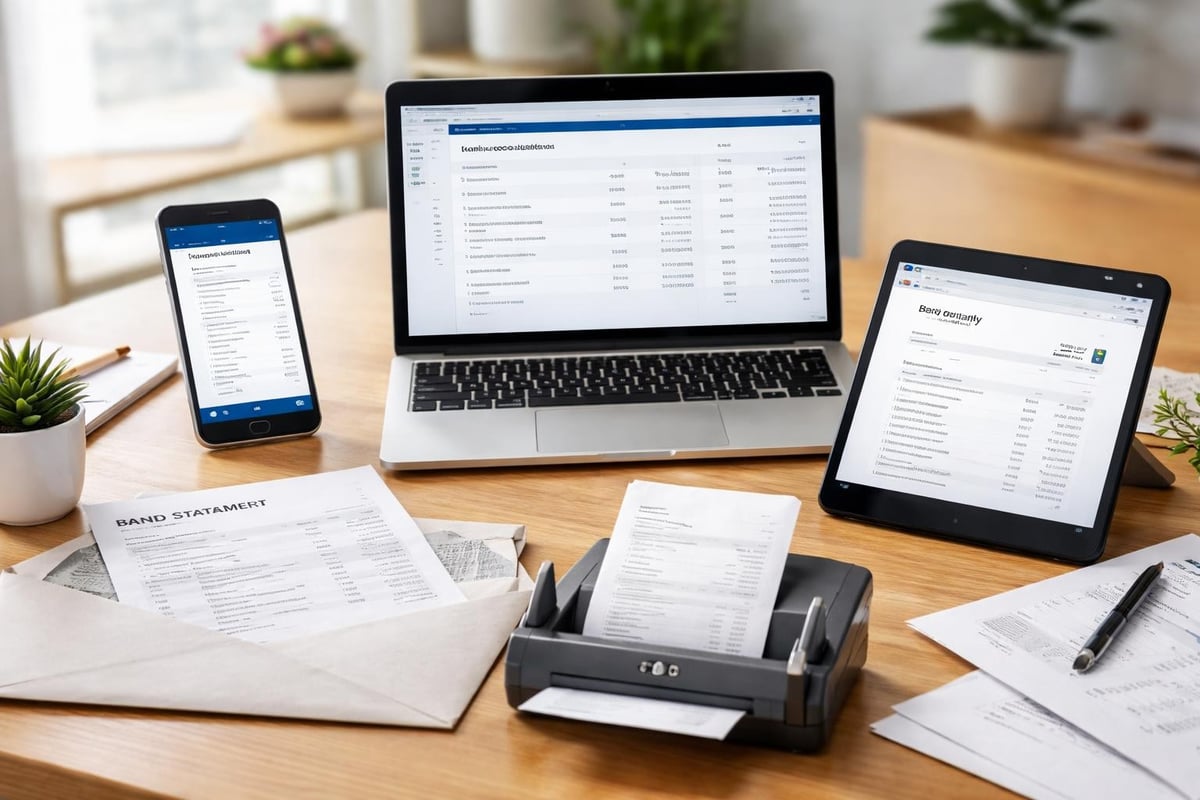
Various methods exist to check your account balance, including desktop browsers, mobile apps, and automated notifications. Mobile banking apps often feature real-time transaction alerts that flag suspicious activity immediately.
The challenge with digital statements lies in systematic review. PDF documents can be cumbersome to work with, especially when trying to categorize transactions or import data into accounting software. This is where services that convert PDF bank statements to spreadsheet format become particularly valuable, transforming static documents into analyzable data.
Transaction Alert Systems
Proactive monitoring through automated alerts reduces the burden of manual statement checking. Most banks allow you to set thresholds for:
- Transactions above specific dollar amounts
- International purchases
- ATM withdrawals
- Low balance warnings
- Unusual spending patterns
These alerts complement, rather than replace, comprehensive statement review. They provide early warning systems while periodic reviews ensure nothing slips through algorithmic detection.
Accounting Software Integration
Business owners and financially savvy individuals increasingly rely on accounting platforms that automatically import and categorize transactions. QuickBooks, Xero, and similar systems can connect directly to bank accounts, pulling transaction data regularly.
However, automated imports still require human verification. Understanding how platforms like Xero handle bank data helps ensure your accounting remains accurate and compliant.
Best Practices for Systematic Statement Review
Developing a consistent process for checking statements ensures thoroughness while minimizing time investment.
Create a Monthly Review Schedule
Consistency beats intensity in financial monitoring. Set a specific day each month-perhaps when statements become available-to conduct your review. Block calendar time for this task just as you would any important meeting.
For businesses, align statement review with accounting close processes. This synchronization ensures financial reports reflect verified data rather than preliminary information.
Develop a Verification Checklist
Standardizing your review process prevents oversights. A comprehensive checklist might include:
- Opening balance verification against previous statement
- Transaction-by-transaction review for unfamiliar items
- Receipt matching for major purchases
- Recurring charge verification for subscriptions and automated payments
- Fee assessment and justification review
- Interest calculation confirmation
- Closing balance reconciliation with current account status
- Dispute identification and documentation
This systematic approach transforms an overwhelming task into manageable steps.
Maintain Supporting Documentation
Cross-referencing statements with receipts, invoices, and payment confirmations strengthens your financial records. For tax purposes, this documentation proves essential when claiming deductions or defending positions during audits.
| Document Type | Retention Period | Storage Method |
|---|---|---|
| Bank statements | 7 years | Digital + cloud backup |
| Credit card statements | 7 years | Digital + cloud backup |
| Major purchase receipts | Permanent | Digital archive |
| Tax-related receipts | 7 years | Organized by tax year |
| Utility/subscription receipts | 1 year | Digital, then discard |
Digital storage with proper backup protocols ensures accessibility while minimizing physical clutter. Consider both local and cloud storage for redundancy.
Common Statement Review Mistakes to Avoid
Even diligent individuals can fall into patterns that undermine effective financial monitoring.
Relying Solely on Account Balance Checks
Simply verifying that your balance seems reasonable misses the entire point of statement review. PayPal's explanation of bank statement importance emphasizes that the transaction details matter as much as the bottom line.
Small unauthorized charges often go unnoticed when you only glance at balances. Fraudsters count on this oversight, making tiny test purchases before attempting larger theft.
Ignoring Unfamiliar Merchant Names
Transaction descriptions don't always match store names or brands you recognize. Online merchants often process payments through parent companies or payment processors with different names.
Rather than skipping past confusing entries, investigate them. Search the merchant name online, check your email for confirmation messages, or contact your bank for clarification. What seems mysterious might be legitimate-or it might be fraud.
Delaying Dispute Reports
Financial institutions impose strict timeframes for disputing charges. While federal regulations provide some protection, prompt reporting strengthens your position and increases the likelihood of successful resolution.
Most banks require fraud reports within 60 days of the statement date for unauthorized transactions. Waiting longer may limit your recourse options.
Business-Specific Considerations for Checking Statements
Companies face additional complexity when reviewing financial statements due to higher transaction volumes and stricter compliance requirements.
Multi-Account Management
Businesses typically maintain multiple accounts for different purposes: operating accounts, payroll accounts, tax reserve accounts, and merchant processing accounts. Each requires individual attention during the review process.
Consolidating statement data from multiple sources into a unified view helps identify patterns and anomalies across your entire financial operation. Tools that support bank statement analysis can streamline this process significantly.
Employee Expense Verification
When employees use company cards or submit reimbursement requests, statement review serves as a control mechanism ensuring policy compliance. Cross-referencing card statements with expense reports catches discrepancies, duplicate submissions, or unauthorized purchases.
Clear expense policies combined with systematic verification protect company assets while maintaining employee trust through transparent processes.
Tax Preparation and Audit Readiness
Accurate statement records form the backbone of business tax preparation. Categorized transactions, proper documentation, and reconciled accounts make tax season smoother and reduce the risk of costly errors or audit issues.
Reviewing financial statements thoroughly becomes particularly important for businesses seeking credit or investment, as lenders scrutinize financial documentation carefully.

Special Situations Requiring Extra Scrutiny
Certain circumstances demand heightened attention during statement review beyond routine monitoring.
After Data Breaches
When merchants or financial institutions announce data compromises, immediately review all potentially affected accounts. Check not just for obvious fraud but also for subtle signs like small test charges or address change requests.
Consider freezing affected cards and requesting replacements even if no immediate fraud appears. Prevention costs less than remediation.
During Financial Transitions
Life changes like job transitions, relocations, or business restructuring create opportunities for billing errors. Ensure automatic payments update correctly, confirm address changes reflect properly, and verify that expected deposits arrive as scheduled.
For Inactive or Seasonal Accounts
Accounts with minimal activity require checking statements too, despite fewer transactions. Fraudsters sometimes target dormant accounts expecting less vigilant monitoring. Set calendar reminders to review these accounts quarterly at minimum.
Tools and Technology That Enhance Statement Review
Modern solutions address traditional pain points in the statement checking process.
Spreadsheet-Based Analysis
Converting statement data into spreadsheet format enables powerful analysis through sorting, filtering, pivot tables, and formulas. You can identify spending trends, compare periods, and spot anomalies much faster than reviewing static PDFs.
Manual data entry from PDFs is time-consuming and error-prone. Automated conversion services maintain accuracy while saving valuable time that can be redirected toward actual analysis and decision-making.
Categorization and Tagging Systems
Organizing transactions into meaningful categories reveals spending patterns and simplifies tax preparation. While some banking apps offer basic categorization, robust accounting systems provide more detailed taxonomy aligned with business needs or tax schedules.
Consistent categorization year-over-year enables meaningful trend analysis and budgeting accuracy.
Security Considerations
When using any technology to assist with statement review, prioritize security measures that protect your sensitive financial data. Verify that services employ bank-level encryption, secure data handling protocols, and clear privacy policies before uploading statements.
Never share account credentials with third parties. Legitimate services work with exported data rather than requiring direct account access.
Building Long-Term Financial Awareness Through Statement Review
Regular checking statements cultivates financial literacy and awareness that extends beyond fraud prevention. Over time, this practice develops intuition about normal spending patterns, seasonal variations, and opportunities for optimization.
Pattern Recognition and Anomaly Detection
As you review statements month after month, you develop familiarity with typical transaction types, amounts, and timing. This baseline awareness makes irregularities stand out immediately, even before detailed analysis.
This skill proves particularly valuable for freelancers and small business owners who must maintain tight control over variable income and expenses. Understanding banking needs specific to freelancers helps structure accounts and review processes appropriately.
Continuous Improvement of Financial Habits
Statement review provides feedback on financial behaviors. When you see the cumulative impact of daily coffee purchases or subscription services, you make more informed choices about whether those expenses align with your priorities.
This isn't about judgment but awareness. Some expenses bring sufficient value to justify their cost; others don't. Regular review illuminates these distinctions.
Documentation for Major Financial Events
Comprehensive statement records support applications for mortgages, business loans, or other situations requiring financial documentation. Clean, organized, and verified statements demonstrate financial responsibility and simplify underwriting processes.
Capital One's overview of bank statement purpose highlights how these documents serve multiple functions beyond simple transaction tracking.
Mastering the practice of checking statements provides both immediate protection against fraud and long-term benefits through enhanced financial awareness and control. Whether you're managing personal finances or business accounts, systematic review transforms raw transaction data into actionable insights that drive better decisions. For those handling multiple statements or needing accounting-ready data, Bank Statement Boss converts PDF statements into accurate spreadsheets with 99% precision, streamlining the review process while maintaining bank-level security for your sensitive financial information.