
PDF statements have become the standard format for financial institutions, service providers, and businesses to deliver monthly account summaries, transaction records, and billing documentation. These digital documents offer portability, consistent formatting across devices, and universal accessibility without specialized software. However, the widespread adoption of pdf statements has also introduced challenges related to data extraction, security vulnerabilities, and workflow efficiency that organizations must address in 2026.
Understanding PDF Statement Formats and Standards
Financial institutions generate pdf statements in various formats, ranging from simple text-based documents to complex layouts with embedded tables, graphics, and security features. The structure of these statements directly impacts their usability for accounting purposes and data analysis.
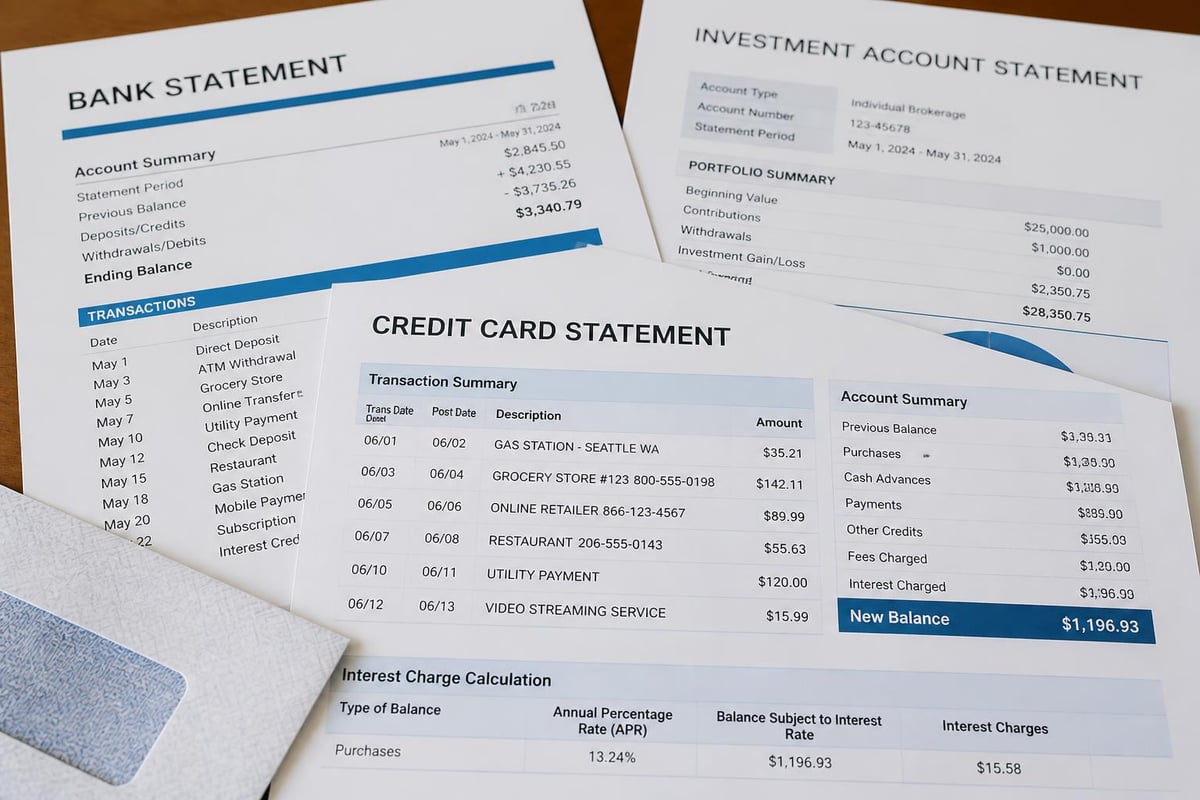
Common PDF Statement Types
Modern financial services produce several distinct categories of documentation:
- Bank statements containing transaction histories, beginning and ending balances, and account summaries
- Credit card statements with purchase details, payment information, and interest calculations
- Investment account statements showing portfolio performance, asset allocation, and trading activity
- Loan statements detailing payment schedules, principal reduction, and interest charges
- Utility and service statements documenting usage patterns and billing cycles
Each type presents unique formatting challenges. Some institutions generate searchable PDF documents with selectable text, while others produce image-based files that require optical character recognition (OCR) for data extraction.
Technical Specifications and Compatibility
The PDF format has evolved significantly since its introduction, with various versions offering different capabilities. PDF/A standards ensure long-term archiving, while PDF/UA focuses on accessibility requirements. Understanding these technical specifications helps organizations choose appropriate tools and processes for managing bank statement formats.
| PDF Version | Key Features | Financial Use Case |
|---|---|---|
| PDF 1.4 | Basic encryption, forms support | Standard monthly statements |
| PDF/A-2 | Long-term archiving, embedded fonts | Regulatory compliance documentation |
| PDF/UA | Accessibility tags, screen reader support | Customer-facing statements |
| PDF 2.0 | Enhanced security, 256-bit encryption | High-security financial reports |
Organizations must balance security requirements with accessibility needs. While password protection adds a security layer, it can complicate automated processing workflows and create barriers for legitimate data extraction.
Security Considerations for PDF Statements
PDF documents can harbor hidden threats in enterprise security that organizations often overlook. Financial statements contain sensitive personal information, account numbers, and transaction details that require robust protection throughout their lifecycle.
Common Security Vulnerabilities
JavaScript exploits represent one of the most significant risks in PDF handling. Malicious actors can embed executable code within seemingly legitimate statement files. Research on PDF malware detection methods reveals sophisticated techniques attackers use to bypass traditional security measures.
The challenge extends beyond external threats. Internal data leakage through metadata and hidden content poses substantial risks. Studies examining hidden data in PDF files demonstrate how sensitive information can persist in documents even after apparent removal, creating compliance and privacy concerns.
Best Practices for Secure Handling
Organizations processing financial statements should implement comprehensive security protocols:
- Validate sources before opening any PDF statement to confirm sender authenticity
- Use dedicated systems for financial document processing, isolated from general network access
- Implement version control to track document modifications and maintain audit trails
- Apply encryption during transmission and storage of sensitive financial data
- Regularly update PDF readers and processing software to patch known vulnerabilities
The balance between accessibility and security requires careful consideration. While some organizations lock down pdf statements with multiple layers of protection, excessive restrictions can hinder legitimate business processes and create inefficiencies in financial workflows.
Converting PDF Statements to Usable Data Formats
The primary limitation of pdf statements lies in their static nature. While excellent for viewing and printing, PDFs don't easily integrate with accounting systems, spreadsheet applications, or financial analysis tools without conversion.
Manual vs. Automated Conversion Methods
Manual data entry remains surprisingly common despite its inefficiency. Finance teams spend countless hours transcribing transaction details from PDF statements into spreadsheets or accounting platforms. This approach carries high error rates, wastes valuable staff time, and creates bottlenecks in financial reporting processes.
Automated solutions leverage different technologies to extract data from pdf statements:
- Template-based extraction works well for consistent formats from the same source
- OCR technology handles image-based PDFs and scanned documents
- AI-powered parsing adapts to varying layouts and formats across institutions
- Rule-based systems extract specific data fields based on predefined patterns
Services that convert PDF bank statements to usable spreadsheets solve these challenges by combining multiple technologies to achieve high accuracy rates across diverse statement formats.

Integration with Accounting Platforms
Modern businesses require seamless data flow between financial statements and accounting systems. The conversion process must produce outputs compatible with platforms like QuickBooks, Xero, FreshBooks, and other professional accounting solutions.
Format requirements vary significantly across platforms. Some accept CSV files with specific column arrangements, while others prefer Excel workbooks with particular sheet structures. Understanding these specifications ensures converted data imports correctly without manual adjustments.
Data mapping becomes critical when transaction descriptions, dates, and amounts must align with platform-specific fields. Proper categorization during conversion reduces reconciliation time and improves financial reporting accuracy.
Workflow Optimization and Process Improvement
Organizations handling substantial volumes of pdf statements benefit from streamlined workflows that minimize manual intervention while maintaining accuracy and compliance standards.
Establishing Efficient Processing Systems
A well-designed statement processing system incorporates multiple stages:
- Receipt and organization of incoming pdf statements from various sources
- Classification and routing based on document type and account category
- Data extraction and validation through automated conversion tools
- Review and verification of critical transactions and balances
- Import and reconciliation within accounting systems
- Archival and retention according to regulatory requirements
Each stage presents opportunities for automation and improvement. Businesses should evaluate their current processes to identify bottlenecks and inefficiencies that increase processing time or error rates.
Measuring Conversion Accuracy and Quality
Accuracy metrics provide essential feedback on conversion quality and help organizations choose appropriate tools and vendors. Key performance indicators include:
| Metric | Target Range | Impact Area |
|---|---|---|
| Field-level accuracy | >95% | Individual data point correctness |
| Transaction completeness | >98% | Missing entries detection |
| Balance reconciliation | 100% | Opening/closing balance match |
| Date format consistency | 100% | Temporal data integrity |
| Amount precision | 100% | Financial calculation accuracy |
Regular auditing of converted data against source pdf statements ensures ongoing quality. Sample testing should occur frequently, with complete verification for high-value accounts or critical reporting periods.
Compliance and Documentation Requirements
Financial regulations mandate specific retention periods and accessibility standards for account statements. Organizations must balance digital transformation initiatives with regulatory compliance obligations.
Retention Policies and Legal Requirements
Different document types carry varying retention requirements. Tax-related statements typically require seven-year retention, while certain regulatory filings demand longer periods. PDF format generally satisfies archival requirements when properly stored and backed up.
Accessibility standards under Section 508 and similar regulations require pdf statements to accommodate users with disabilities. Following best practices for creating accessible PDFs ensures compliance while improving usability for all recipients.
Audit Trails and Version Control
Maintaining detailed records of statement processing activities supports internal controls and external audits. Documentation should capture:
- Receipt timestamps and source identification
- Conversion methods and tool versions used
- Validation results and exception handling
- User access logs and modification history
- Retention schedules and disposal records
Digital signature capabilities in modern PDF standards help verify document authenticity and detect unauthorized alterations. Organizations handling sensitive financial information should leverage these features to strengthen their control environments.

Advanced Processing Techniques and Technologies
Emerging technologies continue to expand possibilities for pdf statement handling. Artificial intelligence, machine learning, and natural language processing enable increasingly sophisticated document understanding and data extraction capabilities.
Machine Learning Applications
AI-powered systems learn from processed documents to improve accuracy over time. These adaptive technologies recognize patterns across different statement formats and adjust extraction logic automatically. Unlike rigid template-based approaches, machine learning models handle variations in layout, font, and structure without manual reconfiguration.
Training data quality directly impacts model performance. Systems exposed to diverse statement formats from multiple financial institutions develop broader recognition capabilities than those trained on limited samples. Organizations should evaluate whether vendors maintain comprehensive training datasets covering their specific statement types.
Forensic Analysis and Document Authentication
Sophisticated users may need to verify pdf statement authenticity or identify their creation source. Research on identifying software used to create PDF files reveals that coding styles and technical artifacts can help authenticate documents and detect potential fraud.
This forensic capability becomes particularly relevant when statements serve as evidence in disputes, audits, or legal proceedings. Understanding document provenance supports risk management and strengthens internal controls.
Choosing the Right Conversion Solution
Organizations evaluating pdf statement processing options should consider multiple factors beyond basic conversion capability. The right solution balances accuracy, security, integration, cost, and scalability requirements.
Evaluation Criteria for Statement Processing Tools
Security infrastructure should meet or exceed industry standards for financial data handling. Look for solutions offering:
- End-to-end encryption during transmission and processing
- Compliance with SOC 2, ISO 27001, or equivalent certifications
- Clear data retention and deletion policies
- Transparent processing locations and data residency
Accuracy guarantees separate professional solutions from basic converters. Verify claimed accuracy rates through trial conversions of your actual statement formats. The capabilities demonstrated in processing statements from your specific financial institutions matter more than general performance claims.
Integration flexibility determines how easily converted data flows into existing systems. Solutions offering multiple export formats and direct platform connections reduce implementation complexity and ongoing maintenance requirements.
Cost-Benefit Analysis
Traditional manual processing carries hidden costs that automated solutions eliminate:
- Labor expenses for data entry and verification tasks
- Error correction and reconciliation time
- Delayed reporting due to processing bottlenecks
- Opportunity costs from staff focusing on transcription instead of analysis
When evaluating checking statements and other financial documents, calculate the total time your team spends on statement processing monthly. Multiply by loaded labor costs to understand the economic impact of current workflows.
Future Trends in PDF Statement Management
The evolution of financial technology continues to reshape how organizations receive, process, and utilize statement data. Several trends will influence pdf statement handling in coming years.
API-Based Data Delivery
Progressive financial institutions increasingly offer API access to transaction data, potentially reducing reliance on pdf statements for routine processing. However, regulatory requirements and customer preferences ensure PDFs remain relevant for verification, archival, and compliance purposes.
Hybrid approaches combining API feeds for operational data with pdf statements for record-keeping represent an emerging best practice. This dual-channel strategy provides both real-time access and traditional documentation.
Enhanced Standardization Efforts
Industry initiatives promoting standardized statement formats could simplify processing and improve interoperability. While complete standardization seems unlikely given the diversity of financial products and institutions, incremental improvements in consistency benefit all stakeholders.
Organizations should monitor developments in PDF standards and financial data interchange formats to anticipate opportunities for process improvement and technology adoption.
Managing pdf statements effectively requires attention to security, accuracy, and workflow efficiency. Organizations that implement robust processes for handling these critical financial documents position themselves for improved compliance, reduced operational costs, and faster financial reporting. When you're ready to transform your statement processing workflow, Bank Statement Boss delivers AI-powered conversion with 99% accuracy, bank-level security, and seamless integration with major accounting platforms.