
Your most recent bank statement serves as the cornerstone of personal and business financial management. Whether you're applying for a loan, preparing taxes, reconciling accounts, or simply tracking your spending habits, having immediate access to current financial documentation has become increasingly important in 2026. Understanding how to obtain, interpret, and manage your most recent bank statement can streamline countless financial processes and help you maintain better control over your money.
Understanding What Constitutes Your Most Recent Bank Statement
A bank statement represents a comprehensive record of all transactions processed through your account during a specific period, typically one month. Your most recent bank statement reflects the latest completed statement cycle and includes deposits, withdrawals, fees, interest earned, and your ending balance.
Key components typically included:
- Account holder information and account number
- Statement period dates (beginning and ending)
- Beginning and ending balances
- Chronological transaction details
- Fee summaries and interest calculations
- Check images or references (when applicable)
The timing of your most recent bank statement depends on your bank's cycle. Most financial institutions generate statements monthly, though the specific cutoff date varies by institution and sometimes by account type. Understanding your statement cycle helps you know exactly which transactions appear on each document.
Digital vs. Paper Statements in 2026
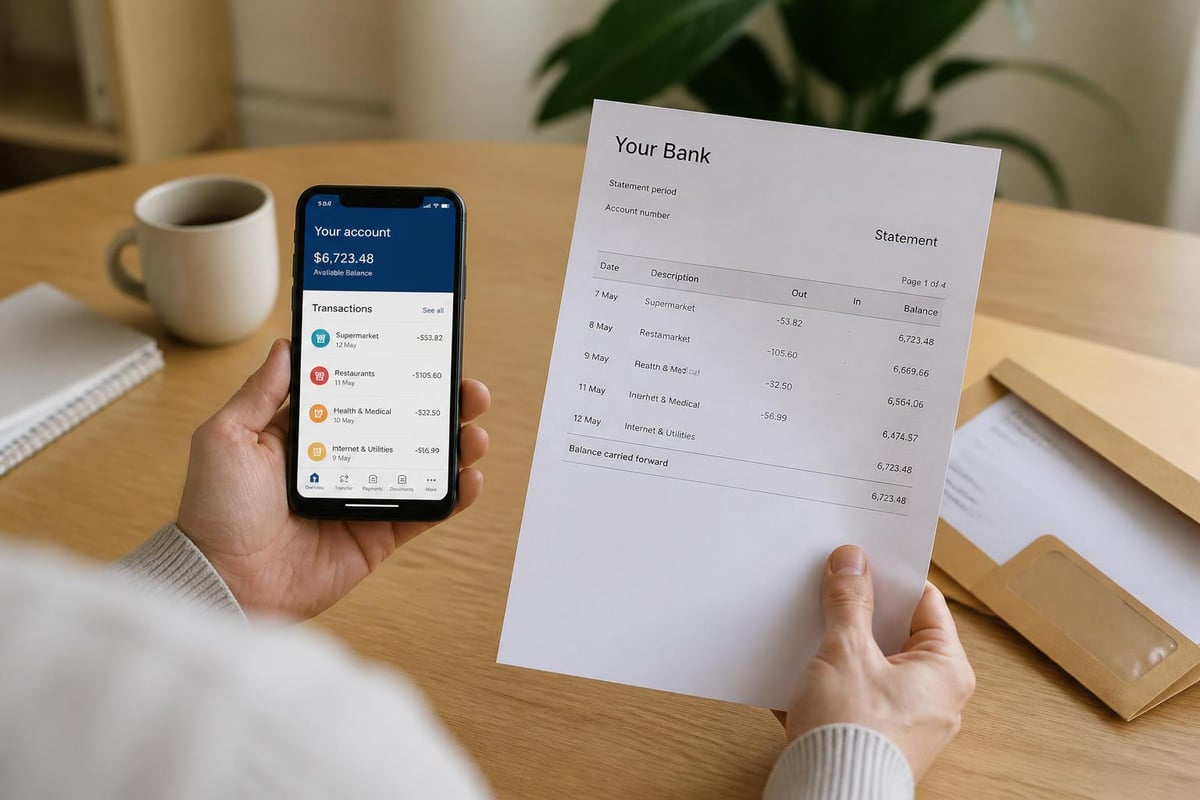
The banking industry has largely transitioned to digital statement delivery, with most institutions now offering paperless options as the default. Your most recent bank statement is typically available through online banking portals within one to three business days after the cycle closes.
Paper statements, while less common, still arrive by mail approximately five to ten business days after the statement date. This delivery delay means your paper copy may not be the most current version when it reaches you, making digital access the preferred method for time-sensitive needs.
Why You Need Your Most Recent Bank Statement
Financial institutions, government agencies, and service providers frequently request your most recent bank statement as proof of various financial details. The document's recency matters significantly because outdated statements may not accurately reflect your current financial situation.
| Purpose | Why Recent Matters | Typical Age Requirement |
|---|---|---|
| Loan Applications | Demonstrates current income and spending patterns | 30-60 days |
| Rental Applications | Verifies current financial stability | 30-90 days |
| Tax Preparation | Confirms interest earned and deductible fees | Previous tax year |
| Account Reconciliation | Identifies recent discrepancies | Current month |
| Fraud Detection | Catches unauthorized transactions quickly | Current month |
Lenders reviewing mortgage or auto loan applications specifically require recent documentation because they need to assess your current debt-to-income ratio and cash reserves. A statement from six months ago won't reflect recent financial changes that could impact your creditworthiness.
Legal and Compliance Considerations
Your most recent bank statement carries significant weight in legal contexts. Court proceedings, divorce settlements, and estate planning often require current financial documentation to establish accurate asset valuations and income verification.
Immigration applications frequently demand recent statements as proof of financial support or self-sufficiency. Government benefit programs use current statements to verify eligibility based on asset limits and income thresholds.
How to Obtain Your Most Recent Bank Statement Quickly
Speed matters when you need financial documentation for time-sensitive applications or deadlines. Multiple channels exist for accessing your most recent bank statement, each with different timeframes and accessibility features.
Online Banking and Mobile Apps
Immediate access methods:
- Log into your online banking portal through a web browser
- Navigate to the statements or documents section
- Select the most recent statement period
- Download as PDF or view online
- Save or print as needed
Mobile banking apps offer identical functionality with the added convenience of smartphone access. Most major banks provide instant PDF downloads of your most recent bank statement directly within their apps, making it possible to retrieve documentation anywhere with internet connectivity.
The bank statement format PDF you receive digitally typically includes all the same information as paper versions, often with enhanced security features like encryption and password protection.
Requesting Through Customer Service
When online access isn't available or you need specialized documentation, contacting your bank directly provides alternative options. Customer service representatives can email your most recent bank statement, prepare certified copies, or expedite paper delivery.
Phone request process:
- Call your bank's customer service line
- Verify your identity through security questions
- Specify the exact statement period needed
- Choose delivery method (email, mail, or branch pickup)
- Confirm any associated fees
Branch visits offer immediate assistance, with representatives able to print your most recent bank statement on the spot. This option works well when you need same-day documentation or require notarized copies for legal purposes. For detailed guidance on various request methods, review these tips on how to request statement documentation.

Best Practices for Managing Your Most Recent Bank Statement
Effective statement management extends beyond simply downloading or filing documents. Strategic approaches to handling your most recent bank statement can save time, improve financial awareness, and enhance security.
Regular Review Schedules
Establishing a consistent review routine helps catch errors and fraudulent activity quickly. Understanding bank statements and their components enables more effective monitoring of your financial health.
Weekly review checklist:
- Scan recent transactions for unfamiliar charges
- Verify pending transactions match your records
- Note any unusual account activity patterns
- Cross-reference with receipts and invoices
Monthly deep review when receiving your most recent bank statement:
- Compare ending balance to your personal records
- Categorize all expenses for budget analysis
- Identify recurring charges and subscriptions
- Calculate actual spending versus budgeted amounts
- Check for fee assessments and interest calculations
This dual-layer approach balances vigilance with efficiency, preventing review fatigue while maintaining strong financial oversight.
Secure Storage Solutions
Your most recent bank statement contains sensitive personal information requiring protection against identity theft and fraud. Digital and physical storage both demand security considerations.
| Storage Method | Security Features | Accessibility | Retention Period |
|---|---|---|---|
| Password-Protected Cloud | Encryption, multi-factor authentication | Anywhere with internet | Indefinite |
| External Hard Drive | Physical security, encryption optional | Limited to device location | Indefinite |
| Physical Filing | Locked cabinet, limited access | Home/office only | Shred after 7 years |
| Bank Portal | Bank-level encryption | Through banking login | Varies by institution |
Many banks maintain checking statements and other account documentation online for 12 to 24 months, though some extend access up to seven years. Downloading and storing your most recent bank statement independently ensures you retain access regardless of your bank's retention policies.
Converting Your Most Recent Bank Statement for Practical Use
Raw PDF statements, while official and complete, often present challenges for financial analysis and accounting integration. Converting your most recent bank statement into spreadsheet format enables easier manipulation, categorization, and integration with budgeting or accounting software.
Manual data entry from your most recent bank statement into Excel or Google Sheets consumes considerable time and introduces transcription errors. A single mistake in transferring transaction data can cascade through your entire accounting system, causing reconciliation headaches and inaccurate financial reporting.
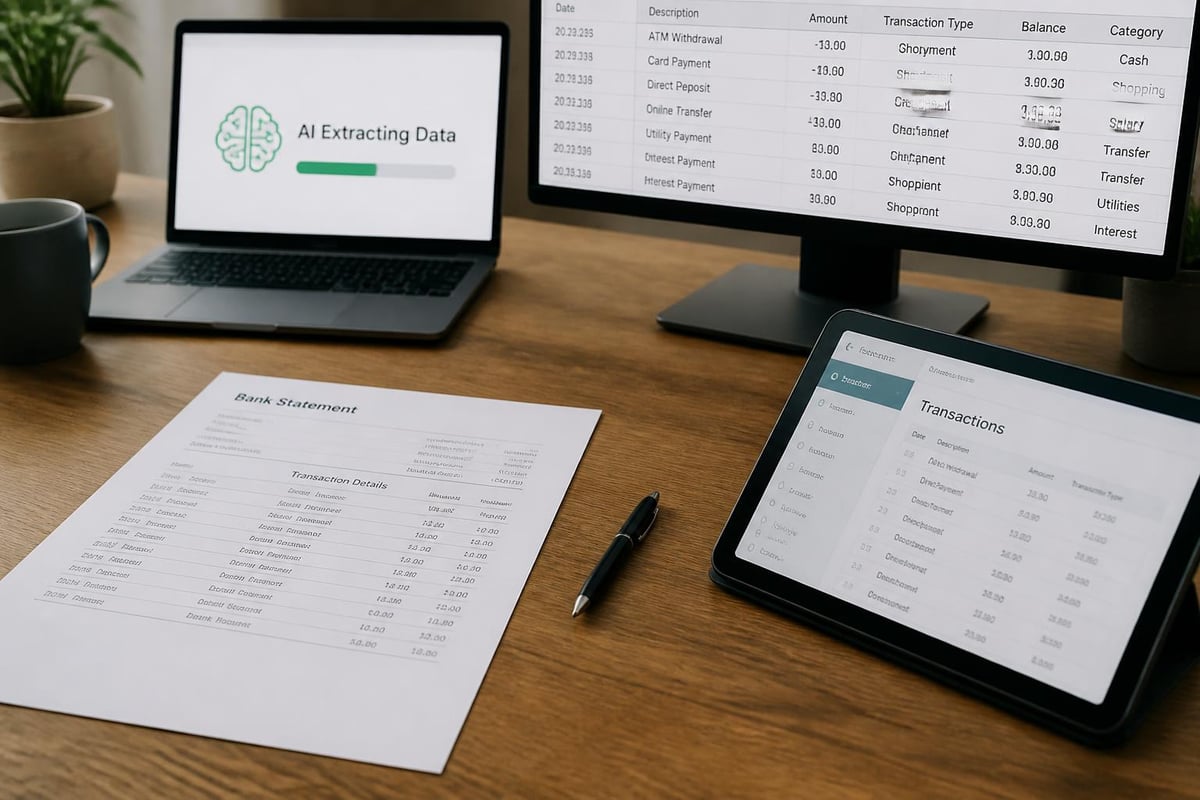
Modern solutions like PDF bank statement to spreadsheet conversion services automate this process using artificial intelligence. These tools extract transaction data from your most recent bank statement with high accuracy, organizing information into structured formats compatible with accounting platforms like QuickBooks, Xero, and FreshBooks.
Conversion benefits include:
- Elimination of manual data entry time
- Reduced transcription errors
- Automatic transaction categorization
- Easy import to accounting software
- Enhanced data analysis capabilities
- Simplified expense tracking and reporting
This approach proves particularly valuable for business owners, accountants, and individuals managing multiple accounts who regularly need to process their most recent bank statement for bookkeeping purposes.
Common Issues with Most Recent Bank Statements
Despite the routine nature of bank statements, various problems can arise that complicate accessing or using your most recent bank statement effectively.
Statement Delivery Delays
Digital statements occasionally fail to generate on schedule due to technical issues, system maintenance, or account status changes. When your most recent bank statement doesn't appear within the expected timeframe, contact your bank to investigate potential causes.
Troubleshooting steps:
- Verify your statement delivery preferences haven't changed
- Check spam/junk folders for email notifications
- Confirm your email address on file is current
- Review account status for holds or restrictions
- Contact customer service if issues persist beyond 48 hours
Paper statement delays typically stem from postal service issues rather than bank problems. Requesting a digital copy provides immediate access while investigating delivery problems.
Discrepancies and Errors
Finding discrepancies between your records and your most recent bank statement requires prompt attention. According to banking experts, you typically have 60 days from the statement date to report errors for investigation and potential correction.
Common discrepancy types:
- Duplicate charges from merchants
- Incorrect transaction amounts
- Missing deposits or credits
- Unauthorized withdrawals
- Miscalculated fees or interest
- Transactions from closed accounts
Document all discrepancies with supporting evidence like receipts, confirmation numbers, and correspondence. Most banks provide dispute forms specifically for contesting items appearing on your most recent bank statement.
Specialized Statement Needs for Different Audiences
Different users require their most recent bank statement for distinct purposes, each with unique considerations and challenges.
Business Owners and Accountants
Businesses typically maintain multiple accounts, generating numerous statements monthly. Your most recent bank statement for each business account becomes critical during tax season, audit preparation, and financial reporting periods.
Accounting professionals emphasize the importance of timely statement reconciliation for accurate financial records. Delays in processing your most recent bank statement can cascade into reporting deadline issues and compliance problems.
Automated conversion and import processes significantly reduce the administrative burden associated with processing multiple statements. When handling dozens of transactions monthly across several accounts, manually entering data from your most recent bank statement becomes impractical and error-prone.
Individual Consumers
Personal finance management relies heavily on regular review of your most recent bank statement. Budgeting apps and expense tracking tools often connect directly to bank accounts, but reviewing the official statement provides verification and catches synchronization issues.
Life events like buying a home, applying for credit, or changing jobs frequently require presenting your most recent bank statement as proof of financial stability. Maintaining organized, easily accessible statements streamlines these processes when time-sensitive decisions arise.
Landlords and Property Managers
Tenant screening processes typically request the most recent bank statement as part of application packages. Landlords use this documentation to verify that prospective tenants maintain sufficient funds to cover rent and deposits.
The recency requirement stems from the need to confirm current financial status rather than historical wealth. A tenant might have held substantial funds six months ago but depleted them since, making older statements misleading.
Technology and Security Considerations
As banking moves increasingly digital, your most recent bank statement exists primarily in electronic form, raising important technology and security questions.
Data Protection Standards
Financial institutions employ bank-level security measures to protect statement data, including encryption, secure socket layers, and multi-factor authentication. When downloading your most recent bank statement, ensure you're using secure connections and trusted devices.
Security best practices:
- Never access banking through public WiFi
- Use unique, complex passwords for banking accounts
- Enable two-factor authentication when available
- Regularly update banking app versions
- Monitor account access logs for suspicious activity
- Immediately report lost devices with banking apps
Third-party services handling your most recent bank statement should demonstrate comparable security standards. Verify that conversion tools and financial management platforms maintain proper encryption, data handling protocols, and compliance certifications.
Format Compatibility
Your most recent bank statement typically arrives as a PDF, a format chosen for its universal compatibility and difficulty to alter. However, PDFs present challenges for data analysis and integration with financial software.
Understanding statement formatting helps you choose appropriate conversion methods. Some banks generate statements with selectable text, while others create image-based PDFs requiring optical character recognition for data extraction.
The quality and accuracy of conversion depends significantly on the source format. Clean, text-based statements from your most recent bank statement period convert more reliably than scanned images or poorly formatted documents.
Frequency and Retention Requirements
How often you need your most recent bank statement and how long you should retain it varies by purpose and regulatory requirements.
Personal Retention Guidelines
Recommended retention periods:
| Document Type | Retention Period | Reason |
|---|---|---|
| Tax-related statements | 7 years | IRS audit period |
| Loan/mortgage statements | Life of loan + 7 years | Payment verification |
| Regular monthly statements | 1-3 years | General reference |
| Statements with major purchases | Indefinite | Warranty/insurance claims |
Your most recent bank statement always holds immediate relevance, but older statements shouldn't be discarded prematurely. Unexpected situations like audits, legal disputes, or insurance claims may require historical documentation years after the original statement date.
Business Retention Standards
Businesses face stricter retention requirements due to tax regulations, audit trails, and corporate governance standards. Most accounting standards recommend keeping your most recent bank statement and all historical statements for at least seven years.
Certain industries face extended requirements. Healthcare providers, government contractors, and publicly traded companies may need to retain statements for ten years or longer based on specific regulatory frameworks.
Managing your most recent bank statement effectively requires understanding how to access, secure, and utilize this critical financial document. Whether you need documentation for loan applications, tax preparation, or routine account monitoring, having streamlined processes for obtaining and working with current statements saves time and reduces stress. Bank Statement Boss helps you maximize the value of your financial documentation by converting PDF statements into usable spreadsheets with 99% accuracy, making reconciliation and analysis faster and more reliable while maintaining bank-level security throughout the process.