
Understanding every bank statement transaction on your financial records is essential for maintaining accurate business accounting and making informed financial decisions. Each transaction tells a story about your business's financial health, but deciphering these entries requires knowledge of transaction codes, categorization methods, and reconciliation processes. In 2026, with advanced digital tools and AI-powered solutions, managing bank statement transactions has become more streamlined, yet the fundamentals remain critical for every business owner and financial professional.
What Is a Bank Statement Transaction
A bank statement transaction represents any movement of money into or out of your account during a specific period. Every deposit, withdrawal, transfer, fee, or interest payment appears as a separate entry on your statement.
Core Components of Transaction Entries
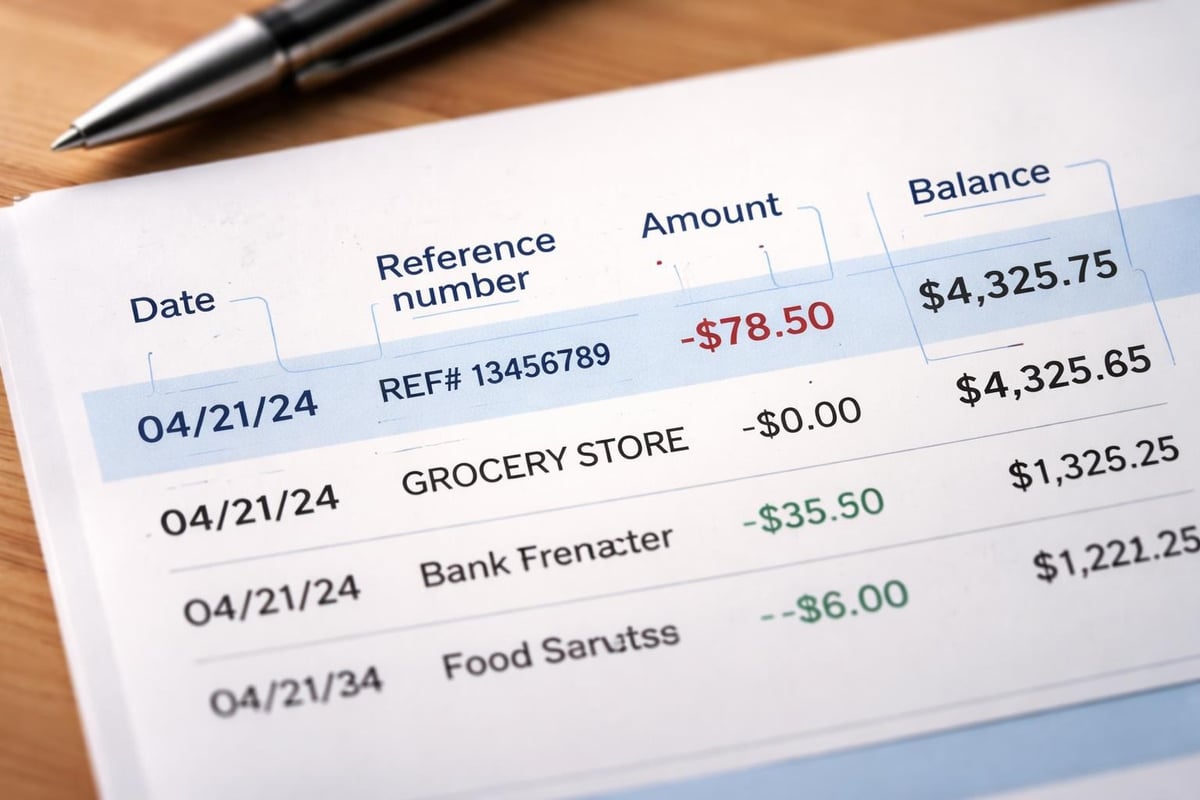
Each bank statement transaction contains several key data points that provide essential information. The transaction date indicates when the activity occurred, while the posting date shows when your bank processed it. The description field explains the nature of the transaction, and the amount column displays the monetary value with clear debit or credit indicators.
Critical transaction elements include:
- Transaction identification number or reference code
- Merchant or payee name
- Transaction type (debit, credit, ACH, wire transfer)
- Running balance after each transaction
- Additional memo fields or notes
The description field deserves particular attention because it often contains abbreviated merchant names, location codes, and transaction type indicators that require interpretation. Understanding these abbreviations helps you quickly identify legitimate charges and spot potential errors or fraudulent activities.
Common Transaction Types and Codes
Financial institutions use standardized codes and descriptions to categorize different types of transactions. Recognizing these codes accelerates the reconciliation process and helps maintain organized financial records.
Electronic Transaction Categories
Electronic transactions dominate modern banking statements. ACH (Automated Clearing House) transactions appear for direct deposits, automatic bill payments, and business-to-business transfers. These entries typically include "ACH" in the description along with the originating company name.
Point-of-sale (POS) transactions show purchases made with your debit card. Wire transfers appear with "WIRE" designations and include sender or recipient information. Online banking transfers between your accounts display as internal transfers with specific coding.
| Transaction Type | Common Code | Processing Time | Typical Use Case |
|---|---|---|---|
| ACH Credit | ACH DEP | 1-3 business days | Payroll, vendor payments |
| ACH Debit | ACH WD | 1-3 business days | Automatic bill pay |
| Wire Transfer | WIRE | Same day | Large transactions |
| POS Purchase | POS | Immediate | Retail purchases |
| ATM Withdrawal | ATM WD | Immediate | Cash access |
Fee and Service Charge Transactions
Banks assess various fees that appear as distinct bank statement transaction entries. Monthly maintenance fees, overdraft charges, ATM fees, and wire transfer fees each have specific codes. Some institutions use "SVC CHG" for service charges or "NSF" for non-sufficient funds fees.
Interest credits appear monthly or quarterly, typically coded as "INT PAID" or similar designations. Understanding fee structures helps businesses optimize their banking relationships and choose the right bank for freelancers and small businesses.
Reading and Interpreting Transaction Descriptions
Transaction descriptions often appear cryptic, combining merchant information with location codes and transaction identifiers. Developing skills to interpret these descriptions saves time and reduces confusion during reconciliation.
Decoding Merchant Information
Most card transactions include the merchant name, but it may not match the business's customer-facing name. Corporate entities often process payments under their parent company name or legal business name. For example, a restaurant chain might appear under its management company rather than the familiar brand name.
Location codes typically follow the merchant name, showing city and state abbreviations. Some entries include the transaction date within the description, which may differ from the posting date. Reference numbers at the end of descriptions help when contacting the bank about specific transactions.
Strategies for identifying unclear transactions:
- Search online for the exact description text
- Check your email for purchase confirmations around the transaction date
- Review receipts from the period in question
- Contact your bank's customer service for clarification
- Use transaction tracking apps that store merchant information
Pending Versus Posted Transactions
Understanding the distinction between pending and posted transactions prevents confusion when reconciling accounts. Pending transactions have been authorized but not yet finalized by your bank. They appear in your online banking but may not show on generated statements until they post.
The time gap between authorization and posting varies by transaction type. Card purchases typically post within one to three business days, while ACH transactions may take three to five days. This timing difference affects your available balance and requires careful tracking.
Managing Transaction Records for Business
Proper management of bank statement transaction data forms the foundation of effective business accounting. Systematic approaches to organizing, categorizing, and storing transaction information streamline tax preparation, financial reporting, and strategic planning.
Transaction Categorization Systems
Implementing a consistent categorization system transforms raw transaction data into meaningful financial insights. Standard categories include operating expenses, cost of goods sold, payroll, taxes, and revenue streams. Each bank statement transaction should map to a specific category within your chart of accounts.
Many businesses use subcategories for detailed tracking. Office expenses might subdivide into supplies, software subscriptions, and equipment. Travel expenses could separate into airfare, lodging, and meals. This granular approach provides better visibility into spending patterns.
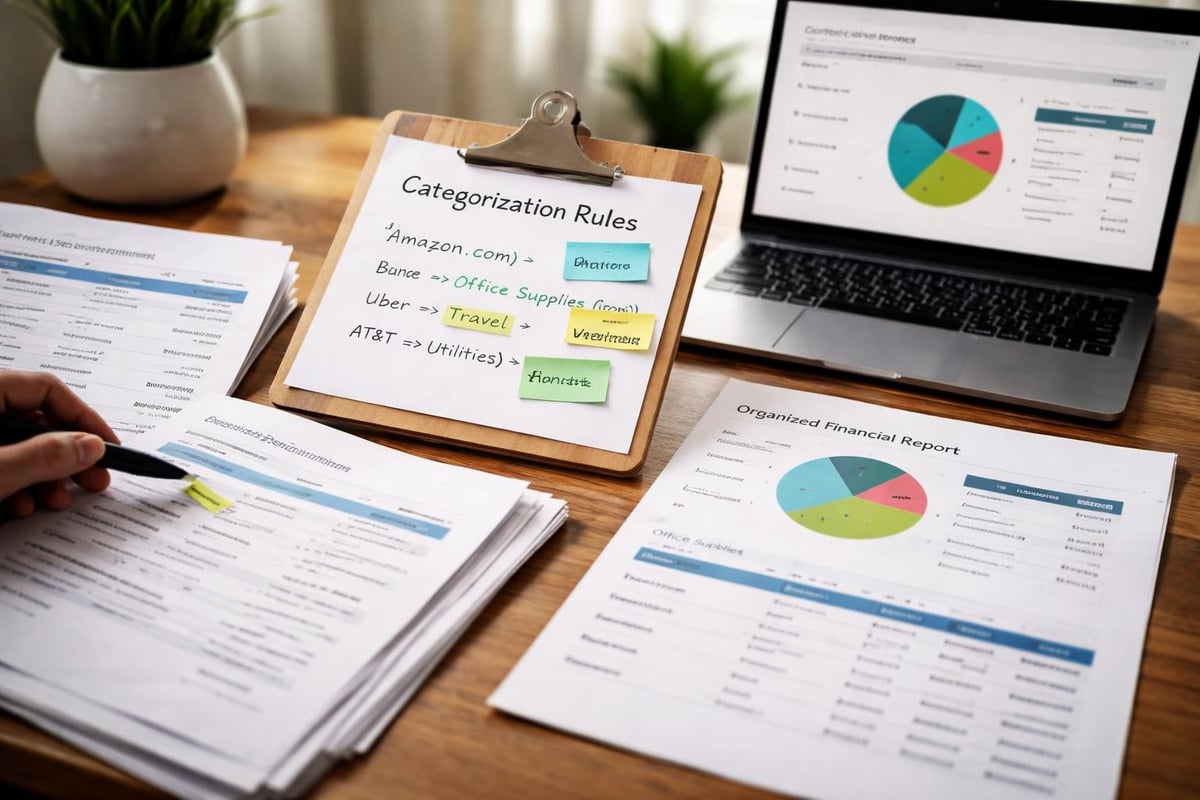
Converting PDF statements into spreadsheet format enables easier categorization and analysis. Services that convert PDF bank statements to usable spreadsheets compatible with platforms like Xero eliminate manual data entry and reduce categorization errors.
Reconciliation Best Practices
Monthly reconciliation compares your internal records against bank statement transaction lists to identify discrepancies. This process catches errors, detects fraud, and ensures accurate financial reporting.
Essential reconciliation steps:
- Gather bank statements and internal transaction logs
- Compare ending balances between both records
- Mark off matching transactions in both systems
- Investigate unmatched or missing entries
- Adjust for timing differences on pending items
- Document and resolve all discrepancies
- Update internal records with bank fees or interest
Setting a regular reconciliation schedule prevents small issues from becoming major problems. Many businesses reconcile weekly or biweekly rather than monthly, particularly for high-volume accounts. This frequency makes the process less time-consuming and catches errors faster.
Transaction Analysis for Financial Insights
Beyond basic record-keeping, analyzing bank statement transaction patterns reveals valuable business intelligence. Understanding cash flow trends, identifying cost-saving opportunities, and detecting anomalies contributes to better financial management.
Cash Flow Pattern Recognition
Examining transaction timing highlights cash flow patterns that impact working capital management. Regular analysis shows when customer payments typically arrive, when major expenses occur, and whether seasonal fluctuations affect your business.
Identifying these patterns enables proactive cash management. If transactions show that vendor payments cluster at month-end while customer deposits arrive mid-month, you can adjust payment schedules or build appropriate reserves. Understanding your transaction rhythm prevents cash shortfalls and optimizes interest earnings.
| Analysis Type | Key Metrics | Business Value |
|---|---|---|
| Revenue Timing | Average days to payment | Working capital planning |
| Expense Patterns | Peak spending periods | Budget optimization |
| Fee Assessment | Monthly fee totals | Banking relationship evaluation |
| Transaction Volume | Daily/weekly counts | Operational scaling insights |
Detecting Irregular Transactions
Regular review of bank statement transaction details helps identify unusual activity quickly. Duplicate charges, unexpected fee increases, and unfamiliar merchant names all warrant investigation. Early detection of fraudulent transactions limits financial impact and speeds resolution.
Establishing baseline transaction patterns makes anomalies easier to spot. A bank statement analyzer tool can automatically flag transactions that fall outside normal parameters, such as unusually large amounts, weekend activity in typically weekday accounts, or charges from new geographic locations.
Digital Tools and Automation
Modern technology transforms how businesses handle bank statement transaction management. Automation reduces manual effort, minimizes errors, and provides real-time financial visibility.
Automated Transaction Import
Connecting bank accounts directly to accounting software enables automatic transaction imports. This integration eliminates manual data entry and ensures real-time record updates. Most major accounting platforms support direct bank feeds for seamless transaction synchronization.
However, not all banks support direct integration, and some businesses prefer maintaining separation between banking and accounting systems for security reasons. In these cases, converting downloaded statements into importable formats bridges the gap while maintaining control.
AI-Powered Categorization
Artificial intelligence revolutionizes transaction categorization by learning from historical data and applying rules automatically. AI systems recognize merchant patterns, apply appropriate categories, and flag unusual transactions for review. This technology reduces categorization time by up to 90% while improving accuracy.
Machine learning algorithms improve over time, becoming more accurate as they process additional transactions. They identify subtle patterns human reviewers might miss and maintain consistency across large transaction volumes. The combination of speed and accuracy makes AI categorization particularly valuable for businesses processing hundreds of transactions monthly.
Security and Fraud Prevention
Protecting bank statement transaction data requires robust security measures and vigilant monitoring. Data breaches, unauthorized access, and transaction fraud pose significant risks to businesses of all sizes.
Transaction Monitoring Protocols
Implementing systematic transaction monitoring catches fraud before it causes substantial damage. Daily or weekly review of posted transactions identifies unauthorized charges quickly, maximizing the chances of recovery and minimizing liability.
Effective monitoring practices include:
- Setting up transaction alerts for amounts above specific thresholds
- Reviewing all international transactions if you operate domestically
- Verifying large or unusual vendor payments before they process
- Confirming that recurring subscription charges match authorized services
- Investigating any transactions from unfamiliar merchants
Multi-person verification for large transactions adds an additional security layer. Requiring two approvals for transactions exceeding predetermined amounts prevents single-person fraud and catches errors before money leaves your account.
Data Security Standards
Bank statement transaction data contains sensitive financial information requiring protection equivalent to the standards banks themselves use. When storing statements or sharing transaction data with accountants or financial advisors, ensure appropriate security measures are in place.
Encryption protects data both in transit and at rest. Secure file transfer protocols prevent interception when sending statements electronically. Access controls limit who can view transaction details, and audit logs track all data access for security monitoring. Reputable financial service providers maintain bank-level security protocols that protect your sensitive information.

Regulatory Compliance and Record Retention
Businesses must maintain bank statement transaction records according to regulatory requirements and industry standards. Proper retention policies ensure compliance while supporting audit needs and legal proceedings.
Retention Requirements by Industry
Different industries face varying record retention requirements. The IRS generally requires businesses to retain financial records for at least three years, though seven years provides better protection for most situations. Some industries have longer requirements based on specific regulations.
Financial services companies, healthcare providers, and government contractors often face extended retention periods. Understanding your industry's specific requirements prevents premature destruction of needed records and ensures audit readiness.
| Entity Type | Minimum Retention | Recommended Retention |
|---|---|---|
| Small Business | 3 years (IRS) | 7 years |
| Corporation | 7 years | 10 years |
| Nonprofit | 7 years | Permanent for key docs |
| Healthcare | 6 years (HIPAA) | 10 years |
Organizing Historical Transactions
Systematic organization of historical bank statement transaction records facilitates retrieval when needed. Digital storage with appropriate backup systems provides better protection than paper records while requiring less physical space.
Organizing files by year and month creates intuitive navigation. Including account numbers in file names helps distinguish multiple accounts. Maintaining both original PDF statements and converted spreadsheet formats provides flexibility for different analysis needs.
Regular backup procedures protect against data loss from hardware failure, natural disasters, or cyber incidents. Following the 3-2-1 backup rule (three copies, two different media types, one off-site location) ensures transaction data remains accessible regardless of circumstances.
Reconciling Multiple Accounts
Businesses operating multiple bank accounts face additional complexity when managing bank statement transaction records. Coordinating transactions across accounts, tracking inter-account transfers, and maintaining consolidated views requires systematic approaches.
Inter-Account Transfer Tracking
Transfers between your own accounts appear as transactions on both statements but don't represent actual income or expenses. Proper coding prevents these transfers from distorting financial reports. Each transfer should match with its corresponding entry on the other account's statement.
Timing differences sometimes create reconciliation challenges when transfers initiated late in a statement period don't post to the receiving account until the next period. Tracking pending transfers and their expected posting dates resolves these temporary mismatches.
Consolidated Transaction Views
Creating consolidated views of all bank statement transaction activity across multiple accounts provides comprehensive financial oversight. Spreadsheet consolidation or multi-account accounting software features combine transaction data while maintaining individual account detail.
Consolidated views reveal total cash position, aggregate spending by category, and overall financial trends that single-account views might obscure. This perspective supports better strategic decision-making and resource allocation across your business operations.
Optimizing Transaction Processing
Streamlining how you handle bank statement transaction data improves efficiency and reduces the time spent on financial administration. Process optimization frees resources for higher-value activities while maintaining accuracy and compliance.
Batch Processing Strategies
Rather than processing transactions individually as they occur, batch processing groups similar transactions for handling together. This approach reduces context-switching and leverages economies of scale in categorization and verification.
Weekly or bi-weekly batch processing sessions work well for most businesses. During these sessions, download statements, categorize all transactions, reconcile accounts, and update financial reports. Concentrated effort during scheduled sessions proves more efficient than sporadic transaction handling throughout the week.
Template and Rule Creation
Establishing transaction categorization rules and templates automates repetitive decisions. When specific merchants always represent the same expense category, create rules that automatically apply proper categorization. Templates for recurring transactions eliminate redundant data entry.
Regular rule review ensures continued accuracy as business operations evolve. Quarterly assessment of categorization rules identifies outdated entries and opportunities for new automation. This maintenance keeps your transaction processing system optimized and accurate.
Understanding and effectively managing every bank statement transaction forms the foundation of sound financial administration for any business. From interpreting transaction codes to implementing automated processing systems, the strategies outlined here streamline financial operations while maintaining accuracy and compliance. Bank Statement Boss eliminates the tedious manual work of converting PDF statements into actionable spreadsheet data, allowing you to focus on analyzing your transactions rather than transcribing them. With 99% accuracy and compatibility with major accounting platforms, Bank Statement Boss transforms how you handle transaction data while maintaining bank-level security standards.