
Managing financial records effectively requires understanding the full spectrum of banking documentation you receive throughout the year. All bank statements collectively represent a comprehensive picture of your financial activity, from everyday checking account transactions to credit card purchases, savings growth, and investment movements. Whether you're a small business owner reconciling monthly accounts or an individual tracking personal expenses, knowing how to obtain, organize, and analyze these documents is essential for financial health and compliance. Modern banking produces multiple statement types across various accounts, and mastering them all creates a foundation for sound financial decision-making.
Understanding the Different Types of Bank Statements
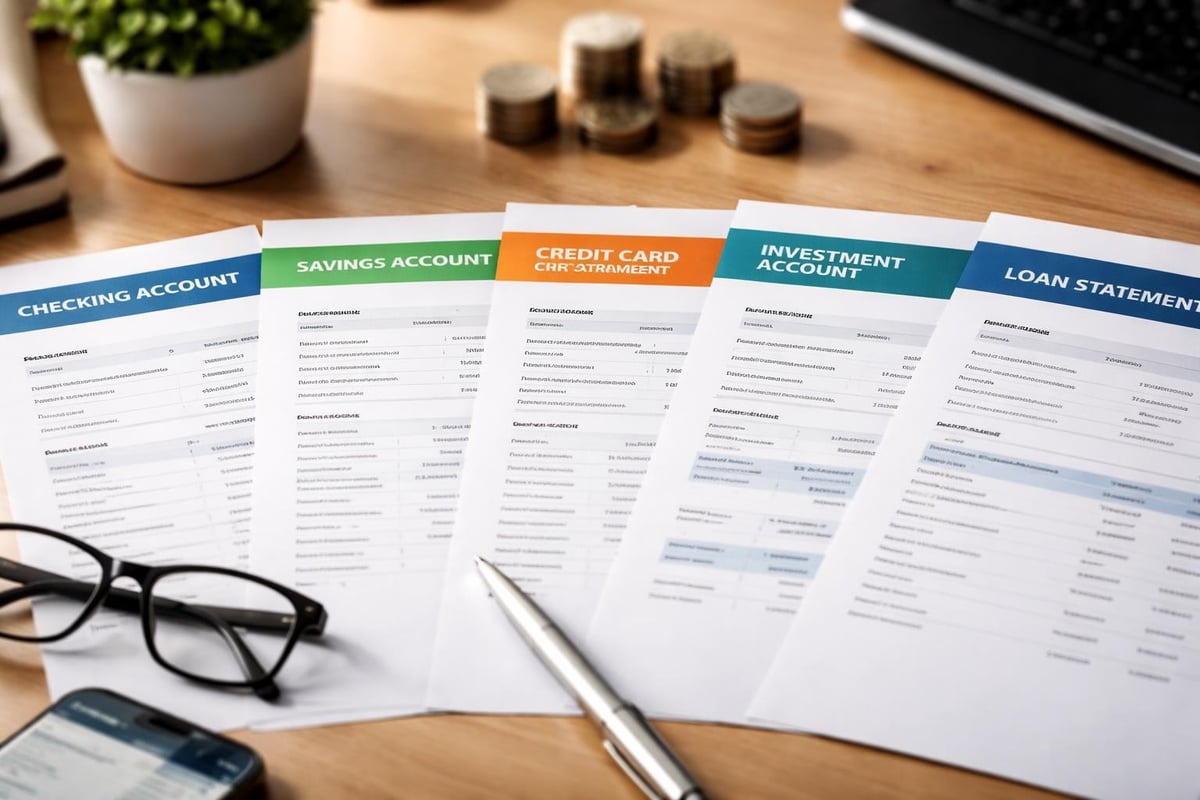
All bank statements are not created equal, and recognizing the distinct categories helps you manage them appropriately. Each financial institution generates specific documentation based on account type and activity.
Checking account statements form the backbone of everyday banking documentation. These statements detail deposits, withdrawals, debit card transactions, check payments, and any fees assessed to your primary transaction account. Bank statements contain crucial information including beginning and ending balances, transaction dates, descriptions, and amounts that flow through your account during the statement period.
Savings account statements track interest earnings and balance growth over time. While typically showing fewer transactions than checking accounts, these statements document transfers, interest accrual, and any maintenance fees that might apply to your savings products.
Credit Card and Loan Statements
Credit card statements represent a distinct category within all bank statements you manage. These documents itemize purchases, payments, interest charges, fees, and available credit limits. Understanding your credit card statement helps you track spending patterns, identify unauthorized charges, and manage payment deadlines to avoid late fees.
Loan statements provide updates on mortgage payments, auto loans, personal loans, and other debt obligations. These statements show principal reduction, interest allocation, remaining balance, and payment due dates. For long-term financial planning, loan statements are indispensable for tracking debt payoff progress.
Investment account statements complete the ecosystem of financial documentation. Brokerage statements, retirement account summaries, and mutual fund reports detail asset holdings, transactions, market value changes, dividends, and capital gains throughout the reporting period.
Key Components Found Across All Bank Statements
While formats vary between institutions and account types, certain elements appear consistently across all bank statements. Recognizing these standard components streamlines your review process and ensures nothing important gets overlooked.
| Component | Purpose | What to Verify |
|---|---|---|
| Account Information | Identifies the specific account | Account number, type, holder names |
| Statement Period | Defines the timeframe covered | Start date, end date, number of days |
| Balance Summary | Shows account position | Beginning balance, ending balance, available balance |
| Transaction Details | Lists all account activity | Date, description, amount, running balance |
| Fees and Charges | Itemizes costs | Monthly fees, overdraft charges, transaction fees |
| Interest Earned/Charged | Shows earnings or costs | APY, interest amounts, calculation method |
Account holder information appears prominently on every statement, including names, addresses, and account numbers. Verify these details regularly to ensure accuracy and detect any unauthorized access to your accounts.
Transaction listings form the core content of all bank statements. Each entry should include the transaction date, posting date, description or merchant name, and the amount debited or credited. Understanding these transaction details helps you reconcile your records against bank records and identify discrepancies quickly.
Security Features and Authentication Elements
Modern bank statements incorporate multiple security features to prevent fraud and ensure authenticity. Watermarks, encrypted PDF protection, unique statement numbers, and official bank logos authenticate legitimate documents. When sharing all bank statements for loan applications, tax preparation, or accounting purposes, these security features verify document legitimacy.
Managing All Bank Statements Effectively
The average individual or small business receives dozens of statements annually across multiple accounts and institutions. Developing systematic management practices prevents lost documents and simplifies financial reviews.
Digital vs. Paper Statement Strategies
Going paperless offers significant advantages for managing all bank statements efficiently. Electronic delivery provides instant access, reduces physical storage needs, and supports environmental sustainability. Most financial institutions now encourage digital statements through online banking portals and mobile apps.
However, paper statements still serve important purposes for certain situations. Some individuals prefer physical copies for record-keeping, while specific legal or compliance scenarios may require original paper documentation. The key is choosing an approach that aligns with your organizational style and regulatory requirements.
- Set up email notifications when new statements become available
- Create consistent filing systems whether digital or physical
- Establish regular review schedules (weekly or monthly)
- Maintain backup copies of critical financial documents
- Implement secure storage solutions for sensitive information

Organizing Multiple Accounts and Institutions
When you maintain relationships with several banks, credit unions, and financial service providers, consolidating all bank statements becomes more complex. Strategic organization prevents important documents from slipping through the cracks.
Create a centralized repository for all your financial statements. Whether you use cloud storage, a dedicated folder on your computer, or a physical filing cabinet, consistency in storage location simplifies retrieval when you need specific documents.
Develop naming conventions that make statements instantly identifiable. Include the institution name, account type, and statement date in file names. For example: "Chase_Checking_2026-04" immediately tells you this is your Chase checking account statement from April 2026.
Calendar reminders help ensure you never miss a statement. Set alerts for when statements typically arrive, then verify you've received and reviewed each one. Missing statements might indicate delivery problems or, more seriously, unauthorized account access.
Retention Guidelines for Financial Records
Understanding how long to keep all bank statements protects you legally while preventing unnecessary clutter. The Internal Revenue Service recommends retaining tax-related financial documents for at least three years, though seven years provides additional protection for audit situations.
Keep indefinitely: Statements documenting major purchases (homes, vehicles), tax returns, investment transactions, and retirement account activity.
Keep for seven years: Statements supporting business expenses, charitable deductions, and income verification.
Keep for one year: Regular checking and savings statements after verification, unless needed for tax purposes.
Shred immediately: Duplicate statements, outdated account information, and documents from closed accounts after the retention period expires.
Converting and Analyzing Bank Statements
Receiving all bank statements is just the first step. Extracting meaningful insights requires converting raw statement data into analyzable formats. This process becomes critical for businesses managing cash flow, individuals tracking budgets, or anyone requiring detailed financial analysis.
Traditional bank statements arrive as PDF documents, which present challenges for numerical analysis. You cannot easily sort transactions, calculate category totals, or import data into accounting software without manual data entry. This time-consuming process introduces errors and limits your ability to gain comprehensive financial insights.
For businesses and individuals seeking efficient financial management, converting PDF bank statements to usable spreadsheets transforms static documents into dynamic financial tools. Modern conversion services use advanced technology to extract transaction data with high accuracy, creating structured spreadsheets that integrate seamlessly with accounting platforms.
Data Extraction and Spreadsheet Integration
Converting all bank statements into spreadsheet format unlocks powerful analytical capabilities:
- Categorize transactions automatically based on merchant names or descriptions
- Calculate monthly spending across different expense categories
- Identify trends in income, expenses, and savings over time
- Reconcile accounts by comparing bank data against your records
- Generate reports for tax preparation, budget planning, or business analysis
- Import directly into QuickBooks, Xero, or other accounting software
The conversion process should preserve all essential data fields: transaction dates, descriptions, amounts, and running balances. Quality conversion maintains accuracy while organizing information in formats that support your specific analytical needs.
Common Challenges When Managing All Bank Statements
Even with systematic approaches, certain obstacles complicate statement management. Recognizing these challenges helps you develop proactive solutions.
Missing statements create gaps in your financial records. Whether due to delivery failures, email filtering, or clerical errors, absent statements require immediate attention. Contact your financial institution promptly to obtain copies and investigate why regular delivery failed.
Inconsistent formats across different institutions frustrate consolidation efforts. Each bank uses proprietary statement layouts, making it difficult to analyze all bank statements uniformly. Bank statement analyzers help standardize data from multiple sources into consistent formats.
Fraudulent transactions sometimes hide within lengthy statement details. Regular thorough reviews of all bank statements protect against unauthorized charges, but manual verification of hundreds of transactions becomes tedious. Systematic categorization helps unusual items stand out for investigation.

Technical Access Issues
Portal navigation problems occur when financial institutions update online banking platforms. Learning new interfaces, resetting passwords, or troubleshooting login failures delays access to statements when you need them. Maintain updated contact information and security credentials to minimize access interruptions.
File compatibility creates headaches when statement PDFs won't open properly or display incorrectly. Outdated PDF readers, password-protected files, or corrupted downloads prevent you from viewing or analyzing your statements. Keep software updated and verify successful downloads immediately.
Using Bank Statements for Financial Planning
All bank statements together provide the raw material for comprehensive financial planning. Rather than isolated snapshots, viewing statements collectively reveals patterns, trends, and opportunities for improvement.
Budget Development and Tracking
Historical spending analysis starts with reviewing all bank statements from the past six to twelve months. Calculate average monthly spending in key categories like housing, transportation, food, utilities, and discretionary purchases. This baseline establishes realistic budget targets grounded in actual behavior rather than aspirational estimates.
Income verification across all your bank accounts confirms total monthly inflows. Include salary deposits, freelance payments, investment income, and other revenue sources. Freelancers particularly benefit from comprehensive income tracking across irregular payment schedules.
| Financial Goal | How Bank Statements Help | Action Steps |
|---|---|---|
| Emergency Fund | Track savings growth and interest | Monitor monthly deposits and balance increases |
| Debt Reduction | Calculate total payments and interest | Analyze credit card and loan statements for optimization |
| Expense Reduction | Identify spending leaks | Flag recurring charges and subscription services |
| Investment Growth | Monitor contribution consistency | Verify automatic transfers to investment accounts |
| Tax Preparation | Compile deductible expenses | Extract charitable donations, business expenses, mortgage interest |
Cash Flow Optimization
Timing analysis reveals when money flows in and out of your accounts. All bank statements show transaction dates, helping you identify periods of surplus or shortage. This information supports strategic decisions about bill payment schedules, savings transfers, and investment timing.
Fee minimization becomes possible when you analyze all bank statements for recurring charges. Monthly maintenance fees, overdraft penalties, ATM surcharges, and other costs drain resources unnecessarily. Identifying these patterns enables you to switch account types, maintain minimum balances, or negotiate fee waivers.
Regulatory Compliance and Documentation Requirements
Various situations require producing all bank statements as verification or proof of financial activity. Understanding these requirements ensures you maintain appropriate records and can provide documentation when needed.
Mortgage applications typically require two to three months of all bank statements across every account you maintain. Lenders verify income stability, assess debt-to-income ratios, and confirm you have sufficient funds for down payments and closing costs. Bank statements provide crucial evidence that supports loan approval.
Tax audits may necessitate producing all bank statements from specific years to substantiate income claims, business expenses, or charitable deductions. The IRS uses banking records to verify reported financial activity and identify discrepancies requiring explanation.
Legal proceedings including divorce settlements, estate administration, or business disputes often demand comprehensive banking documentation. All bank statements establish financial timelines, prove asset ownership, and document transactions relevant to legal matters.
Business-Specific Documentation Needs
Accounting reconciliation requires matching all bank statements against internal financial records. This process verifies that recorded transactions match actual banking activity, identifies errors or omissions, and ensures financial statement accuracy. Many businesses perform monthly reconciliations to maintain current, accurate books.
Investor reporting obligations for certain businesses include providing banking documentation that supports financial claims. All bank statements verify revenue deposits, expense payments, and cash positions reported to stakeholders.
Government contracting and grant-funded work typically involve documentation requirements where all bank statements prove appropriate use of public funds and compliance with spending restrictions.
Security Considerations for Bank Statement Management
Because all bank statements contain sensitive personal and financial information, security must be paramount in your management approach. Account numbers, Social Security numbers, transaction details, and balance information all present risks if compromised.
Digital Security Best Practices
Encryption protects electronic statement files from unauthorized access. Store digital statements in password-protected folders or use encrypted storage solutions. Cloud services should offer enterprise-grade security with multi-factor authentication protecting account access.
Secure transmission matters when sharing all bank statements with accountants, lenders, or other authorized parties. Use encrypted email, secure file transfer services, or dedicated portals rather than sending unprotected attachments through regular email.
Access controls limit who can view, modify, or delete your statement files. On shared computers or networks, user permissions prevent unauthorized individuals from accessing your financial records. Regular password updates and unique credentials for each platform enhance protection.
- Never save banking passwords in browsers or unencrypted files
- Use different passwords for each financial institution
- Enable two-factor authentication wherever available
- Monitor accounts regularly for suspicious activity
- Report lost or stolen devices immediately that access banking apps
- Update security software and operating systems promptly
Physical Document Security
Locked storage protects paper statements from theft, loss, or unauthorized viewing. Filing cabinets with key locks or combination safes provide basic security for important financial documents stored at home or office.
Shredding prevents identity theft when disposing of old statements after retention periods expire. Cross-cut shredders destroy documents thoroughly, making reconstruction virtually impossible. Never simply throw intact statements in regular trash.
Secure disposal of digital media requires special consideration. When replacing computers or storage devices that contained all bank statements, use data destruction software or physical destruction services to prevent data recovery.
Technology Integration and Automation
Modern financial management tools streamline how you collect, organize, and analyze all bank statements. Integration between banking platforms and accounting software reduces manual work while improving accuracy.
Account aggregation services pull together all bank statements and account information from multiple institutions into single dashboard views. These tools provide consolidated financial snapshots without logging into separate banking portals. However, carefully evaluate security practices before granting third-party access to your accounts.
Automatic categorization uses machine learning to classify transactions based on merchant names and historical patterns. Once trained, these systems assign appropriate categories to new transactions appearing on all bank statements, dramatically reducing time spent on manual categorization.
Real-time monitoring through banking apps and alerts keeps you informed of account activity between formal statement periods. Understanding your bank statements becomes easier when you track transactions continuously rather than reviewing monthly batches.
Integration with Accounting Platforms
For businesses and active investors, connecting all bank statements with accounting software creates seamless financial workflows. Rather than manually entering transaction data, automated imports populate accounting records directly from banking sources.
QuickBooks, Xero, and similar platforms offer bank feed connections that automatically download transaction data. These integrations work well for ongoing activity but often struggle with historical data or PDF statements from institutions without direct feed support. Organizations managing Xero bank reconciliation benefit from tools that bridge gaps between PDF statements and accounting platform requirements.
Custom integrations through APIs allow sophisticated users to build tailored connections between banking data and proprietary systems. Financial institutions increasingly offer API access enabling programmatic retrieval of statement data and transaction details.
Statement Verification and Error Detection
Regular careful review of all bank statements protects against errors, fraud, and unauthorized activity. Systematic verification processes catch problems early before they compound into major issues.
Transaction-by-Transaction Review
Match receipts to statement entries for purchases, ensuring amounts and dates align correctly. Discrepancies might indicate merchant errors, duplicate charges, or unauthorized transactions requiring dispute.
Verify deposits appear in expected amounts on anticipated dates. Missing deposits could signal payment failures, while unexpected deposits might represent errors requiring return or investigation.
Confirm balances by checking that each statement's beginning balance matches the previous statement's ending balance. Gaps indicate missing statements or potential account tampering.
Flag unfamiliar merchants or transaction descriptions that you don't recognize. Fraudulent charges often appear as vague or generic descriptions designed to avoid detection. Research unfamiliar items before assuming fraud, as legitimate transactions sometimes appear under parent company names.
Systematic Reconciliation Approaches
- Download or receive all bank statements for the review period
- Compare beginning balances to establish continuity
- Mark off known transactions against your records (receipts, invoices, payment confirmations)
- Investigate unmarked items that appear on statements but not in your records
- Identify missing transactions recorded in your system but absent from bank statements
- Calculate running totals to verify mathematical accuracy
- Document discrepancies for follow-up with your financial institution
- Update records to reflect verified information
- File statements according to your retention system
Corporate finance professionals emphasize that consistent reconciliation prevents small errors from accumulating into significant financial misstatements that complicate tax preparation, audits, or financial reporting.
Specialized Statement Situations
Certain circumstances create unique requirements or challenges for managing all bank statements effectively.
Business accounts typically generate higher transaction volumes than personal accounts, making manual review more time-intensive. Businesses often maintain multiple accounts for different purposes (operating, payroll, savings, merchant services), multiplying statement management complexity.
Trust and estate accounts require meticulous record-keeping to satisfy fiduciary responsibilities. Trustees and executors must document all account activity comprehensively, often producing all bank statements to beneficiaries or courts as evidence of proper asset management.
Joint accounts need coordination between account holders to ensure both parties review statements and verify transactions. Communication prevents situations where one holder makes purchases the other doesn't expect or authorize.
International accounts introduce currency conversion, foreign transaction fees, and potentially different statement formats or languages. Managing all bank statements across borders requires additional attention to exchange rates and international banking regulations.
Understanding and effectively managing all bank statements across your various accounts creates a foundation for financial health, regulatory compliance, and informed decision-making. Whether you're tracking personal expenses, managing business finances, or fulfilling documentation requirements, systematic approaches to statement organization, review, and analysis deliver measurable benefits. Bank Statement Boss helps streamline this process by converting PDF statements into spreadsheet formats that integrate seamlessly with your accounting workflows, transforming static documents into powerful financial management tools.