
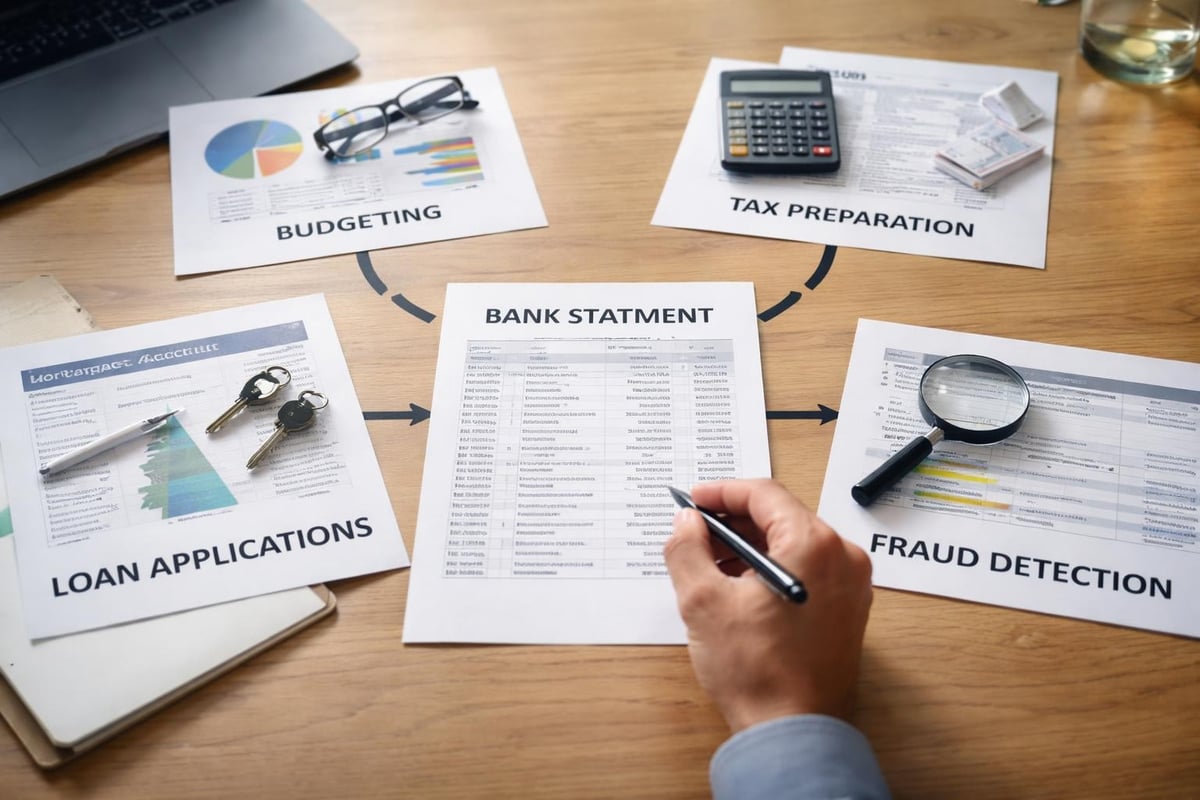
A bank statement serves as one of the most fundamental documents in personal and business financial management. This monthly record provides a comprehensive overview of all transactions flowing through your account, creating a paper trail that proves invaluable for budgeting, tax preparation, fraud detection, and financial planning. Whether you're managing personal finances or overseeing business accounts, understanding how to read and utilize a bank statement effectively can transform your relationship with money and streamline your accounting processes.
What is a Bank Statement and Why It Matters
A bank statement is a detailed record issued by your financial institution that summarizes all account activity over a specific period, typically one month. This document captures every deposit, withdrawal, transfer, fee, and interest payment that affects your account balance.
Chase Bank explains the purpose of bank statements, noting that these documents serve multiple critical functions beyond simple record-keeping. They provide legal proof of transactions, help identify unauthorized activity, and create an audit trail for tax purposes.
Key Components Every Statement Contains
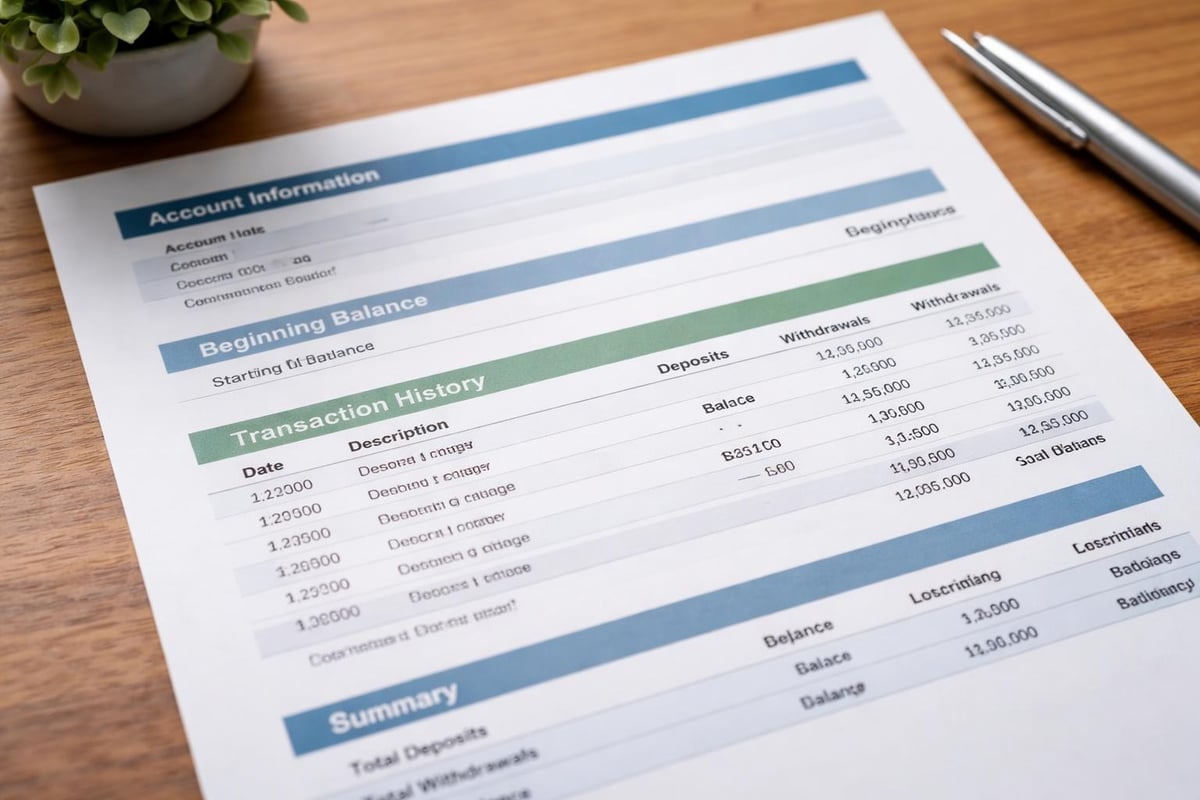
Modern bank statements follow a standardized format, though specific layouts vary between institutions. Understanding each section helps you extract maximum value from these documents.
Essential elements include:
- Account information: Your name, account number, and statement period
- Beginning and ending balances: Shows your financial position at the start and close of the period
- Transaction details: Date, description, and amount for each activity
- Summary sections: Total deposits, withdrawals, fees, and interest earned
- Important notices: Changes to terms, new services, or regulatory information
The transaction section forms the heart of a bank statement, providing a chronological record of your financial activities. Each entry typically includes the transaction date, posting date, description, and amount. Some statements also categorize transactions by type, making it easier to track spending patterns.
How to Read and Interpret Your Statement
Reading a bank statement requires attention to detail and systematic review. TD Bank provides a guide on understanding bank statements, emphasizing that careful analysis helps catch errors and maintain accurate financial records.
Decoding Transaction Descriptions
Transaction descriptions often use abbreviations and codes that can seem cryptic. Merchants may appear under corporate names rather than store names, and automated payments might use reference numbers instead of clear descriptions.
Common transaction types:
- ACH transactions: Automated Clearing House payments for bills or direct deposits
- POS purchases: Point of sale transactions from retail locations
- Wire transfers: Electronic fund transfers, often for large amounts
- ATM withdrawals: Cash removed from automated teller machines
- Check payments: Traditional paper check transactions
- Online transfers: Digital movements between accounts
Understanding these codes prevents confusion and helps you match transactions to your records. When descriptions remain unclear, compare them against your receipts or contact your bank for clarification.
Reconciling Your Statement
Statement reconciliation involves comparing your bank's records against your own to identify discrepancies. This process catches errors, prevents overdrafts, and detects fraudulent activity early.
| Reconciliation Step | Action Required | Frequency |
|---|---|---|
| Compare balances | Match your records to statement balances | Monthly |
| Check each transaction | Verify every entry against receipts | Monthly |
| Identify missing items | Find unrecorded deposits or withdrawals | Monthly |
| Investigate discrepancies | Research any differences immediately | As needed |
| Update your records | Adjust for bank fees or interest | Monthly |
Experian discusses the structure of bank statements and provides practical advice for identifying discrepancies during the reconciliation process. Regular reconciliation protects against both banking errors and unauthorized transactions.
Common Uses for Bank Statements
A bank statement serves purposes far beyond basic record-keeping. These documents play crucial roles in various financial and legal situations.
Financial Management and Budgeting
Statements provide raw data for analyzing spending patterns and creating realistic budgets. By reviewing several months of statements, you can identify trends, spot unnecessary expenses, and allocate resources more effectively.
Business owners particularly benefit from detailed statement analysis. Understanding cash flow patterns helps with inventory management, staffing decisions, and growth planning. Many accounting platforms require statement data for accurate bookkeeping and financial reporting.
For individuals seeking to convert their statements into more usable formats, services like PDF Bank Statement to Spreadsheet can transform static documents into dynamic spreadsheets compatible with accounting software.
Loan and Credit Applications
Lenders require bank statements to verify income, assess financial stability, and evaluate creditworthiness. Mortgage applications typically request three to six months of statements, while business loans may require even longer periods.
What lenders look for:
- Consistent income deposits
- Adequate balance levels
- Responsible account management
- Absence of overdraft fees
- Regular savings patterns
Capital One describes what bank statements are and explains how they demonstrate financial health to potential lenders and creditors.
Tax Preparation and Audit Support
Tax season demands detailed financial records. A bank statement provides documented proof of business expenses, charitable donations, mortgage interest payments, and other deductible items.
For self-employed individuals and small business owners, statements become particularly critical. They verify income reported on tax returns and substantiate deductions claimed. During audits, well-organized statements demonstrate compliance and support your tax positions.
Maintaining digital copies of statements simplifies tax preparation significantly. Using a bank statement analyzer can help categorize expenses automatically, saving hours during tax season.
Digital Access and Statement Management
The shift toward paperless banking has transformed how we receive and manage statements. Most financial institutions now offer electronic delivery as the default option, with paper statements available upon request.
Benefits of Digital Statements
Electronic statements arrive faster, reduce environmental impact, and integrate seamlessly with financial software. They're also easier to store, search, and retrieve when needed.
Advantages include:
- Immediate access on the statement date
- Searchable PDF formats for quick reference
- Secure storage in online banking portals
- Reduced risk of mail theft or loss
- Easy sharing with accountants or advisors
However, digital statements require proactive downloading and organization. Many banks only retain statements online for a limited period, making regular downloads essential for long-term record-keeping.
Security Considerations
Commerce Bank outlines the key components of bank statements while emphasizing the importance of protecting these sensitive documents. Statements contain account numbers, transaction details, and personal information that criminals can exploit.
| Security Measure | Implementation | Purpose |
|---|---|---|
| Password protection | Encrypt PDF files with strong passwords | Prevent unauthorized access |
| Secure storage | Use encrypted cloud services or locked cabinets | Protect against theft |
| Regular monitoring | Review statements within days of receipt | Detect fraud quickly |
| Shredding | Destroy old paper statements properly | Prevent dumpster diving |
| Two-factor authentication | Enable for online banking access | Secure digital statements |
Organizations handling sensitive financial data should implement bank-level security measures to protect client information during processing and storage.
Spotting Errors and Fraudulent Activity
Regular statement review serves as your first line of defense against fraud and banking errors. A bank statement often reveals problems before they escalate into major issues.
Common Red Flags
Certain patterns or entries should trigger immediate investigation. Unfamiliar merchants, duplicate charges, and unexpected fees warrant closer examination.
Watch for:
- Transactions you don't recognize
- Amounts different from your receipts
- Multiple small withdrawals or charges
- Fees you weren't expecting
- Missing expected deposits
- Unauthorized account access
The faster you identify problems, the better your chances of recovery. Most banks require fraud notification within 60 days of the statement date to guarantee refunds.
Reporting and Resolution Process
When you spot an error or suspicious activity on a bank statement, document everything before contacting your bank. Note the transaction date, amount, merchant, and why you believe it's incorrect.
Contact your bank's fraud department immediately for unauthorized transactions. For billing errors, start with the merchant before escalating to your bank. Keep detailed records of all communications, including dates, times, and representative names.
Financial institutions must investigate reported errors within specific timeframes mandated by federal law. While investigations proceed, banks typically issue provisional credits for disputed amounts, preventing financial hardship during the resolution process.

Specialized Statement Considerations
Different account types and industries have unique statement requirements and features worth understanding.
Business vs. Personal Statements
Business bank statements typically include additional details relevant to commercial operations. These might show merchant processing fees, payroll deposits, tax payments, and vendor transactions with enhanced descriptions.
Freelancers and contractors need particularly detailed statement tracking since their income and expenses flow through a single account. Separating business and personal transactions becomes crucial for accurate bookkeeping and tax compliance.
Credit Card Statements
While similar to bank statements, credit card statements include unique elements like minimum payment calculations, interest charges, and credit limit information. These documents show available credit, payment due dates, and the consequences of carrying balances.
Credit card statements also provide more detailed merchant information, including category codes useful for expense tracking. Many cards categorize spending automatically, simplifying budgeting and tax preparation.
Integration with Accounting Software
Modern businesses rarely process statements manually. Instead, they import statement data into accounting platforms like QuickBooks, Xero, or FreshBooks for automated categorization and reporting.
Converting PDF statements into spreadsheet formats compatible with these platforms saves considerable time. Automated import eliminates manual data entry, reduces errors, and accelerates month-end closing processes. Xero integration specifically requires properly formatted transaction data for seamless reconciliation.
Statement Retention and Record-Keeping
Knowing how long to keep a bank statement depends on your situation and potential needs. Personal finance experts and tax professionals offer varying recommendations based on document type and purpose.
Recommended Retention Periods
| Document Type | Retention Period | Reason |
|---|---|---|
| Tax-related statements | 7 years | IRS audit window |
| Loan documentation | Duration + 7 years | Legal protection |
| Investment purchases | Until sale + 7 years | Capital gains calculation |
| Regular monthly statements | 1 year | General reference |
| Business statements | 7 years minimum | Tax and legal compliance |
These guidelines represent minimums. Some situations justify longer retention, particularly for business owners, real estate investors, or those involved in legal proceedings.
Organization Systems
Effective organization makes retrieval simple when you need historical statements. Whether you prefer digital or physical filing, consistency matters most.
Digital organization tips:
- Create folder hierarchies by year and month
- Use consistent naming conventions (YYYY-MM-Bank-Account)
- Store backups in multiple locations
- Consider cloud services with strong encryption
- Tag files with searchable keywords
Physical filing approaches:
- Maintain separate folders for each account
- File chronologically within each folder
- Label clearly with account numbers and dates
- Store in fireproof, waterproof containers
- Keep active year accessible, archive older records
Regular purging of expired documents prevents clutter while maintaining compliance with retention requirements.
Maximizing Statement Value Through Technology
Traditional paper statements limit accessibility and usability. Modern technology transforms these static documents into dynamic financial tools.
Conversion and Data Extraction
PDF bank statements contain valuable data trapped in non-editable formats. Converting these documents into spreadsheets unlocks analytical possibilities, enabling sorting, filtering, and formula-based calculations.
Automated conversion tools use optical character recognition (OCR) and artificial intelligence to extract transaction data with high accuracy. This technology eliminates tedious manual entry while reducing human error.
Analytics and Visualization
Once statement data exists in spreadsheet format, powerful analysis becomes possible. Pivot tables reveal spending patterns by category, charts visualize income trends, and formulas calculate averages or project future balances.
Business intelligence tools can aggregate multiple months or accounts, providing comprehensive financial overviews impossible with individual paper statements. These insights drive better decision-making and strategic planning.
Understanding and effectively utilizing a bank statement creates foundation for sound financial management, whether for personal budgeting or business accounting. The detailed transaction records, balance information, and historical data within these documents support everything from daily money management to tax compliance and fraud prevention. If you're tired of manually processing PDF statements and want to unlock their full analytical potential, Bank Statement Boss can help you convert those static documents into usable spreadsheets with 99% accuracy, compatible with major accounting platforms while maintaining bank-level security for your sensitive financial data.